Book Review: Empire of AI (2025) by Karen Hao

Impeccably researched page-turner essential reading for those most unlikely to read it
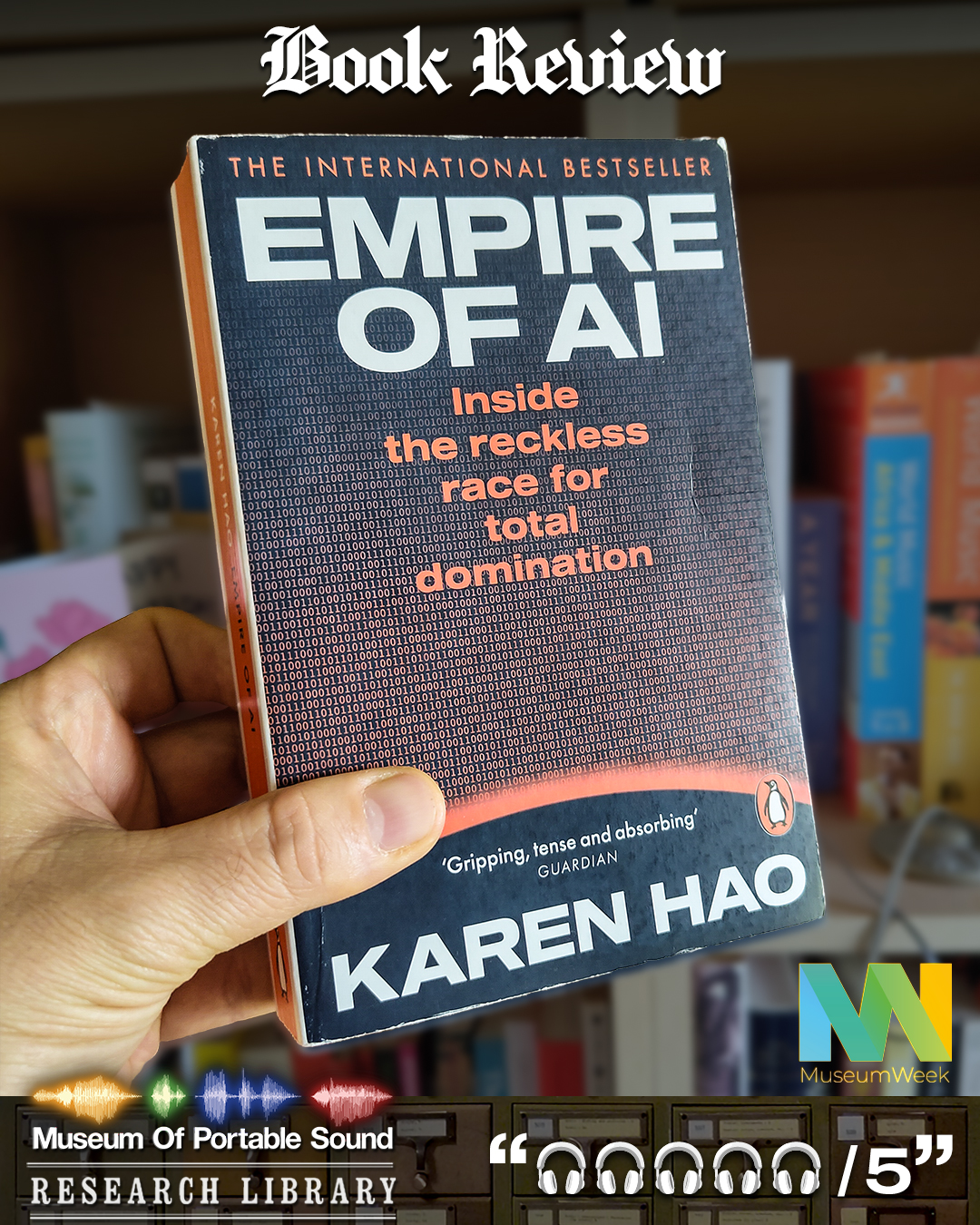
Empire of AI: Inside the Reckless Race for Total Domination by Karen Hao
Allen Lane, London, 2025; 482 pages.
Reviewed by Dr John Kannenberg

Almost a decade ago, the online museum world made collective pledges to decolonise their collections and curatorial practices, to dedicate themselves to social justice issues and “sustainability”, or climate-friendly practices. The very much welcome and necessary #museumsarenotneutral was a movement initiated by American scholars La Tanya Autry and Mike Murawski that acknowledged the inherently political nature of museums – institutions born of colonialism and empire – inviting them to challenge the dark past of their origins and find new relevance as temples of inclusion, understanding, and critical thinking.

I guess that’s all out the window now since 2026’s MuseumWeek is celebrating the use of “AI” in museums – most egregiously by generating their very own deepfakes and pseudo-Impressionist illustrations for their social media posts using AI rather than human creativity and craft – the very things museums were created to preserve in the first place.
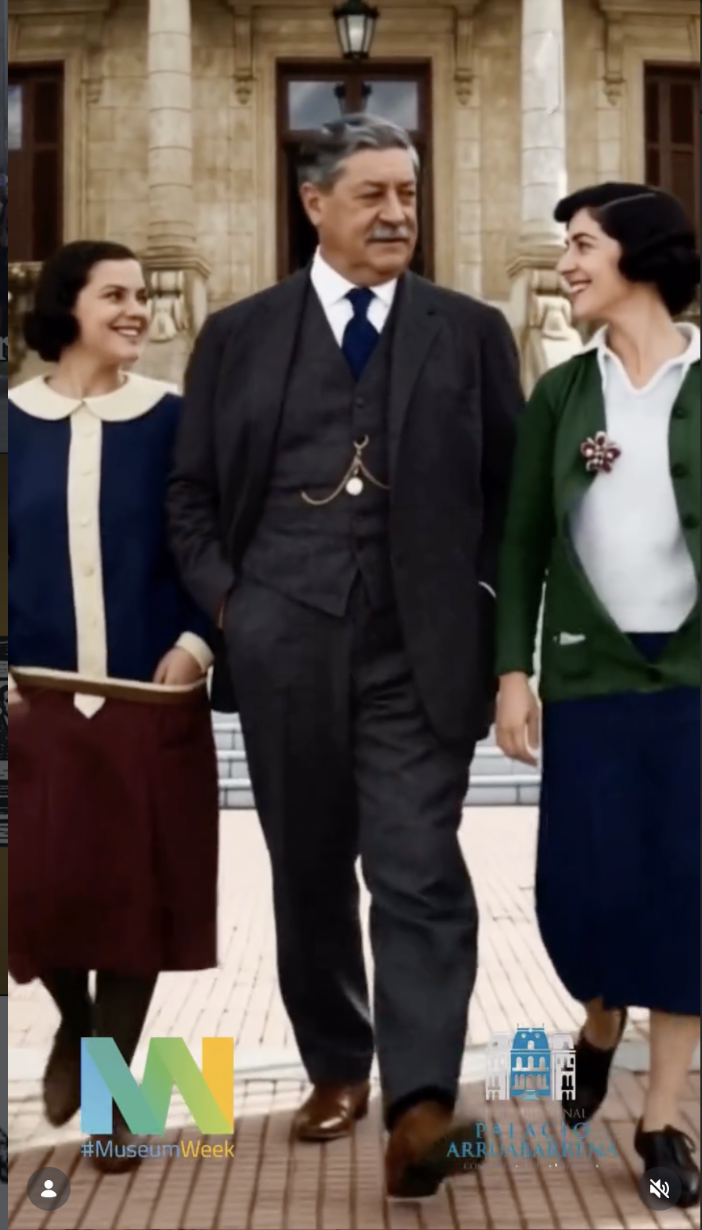
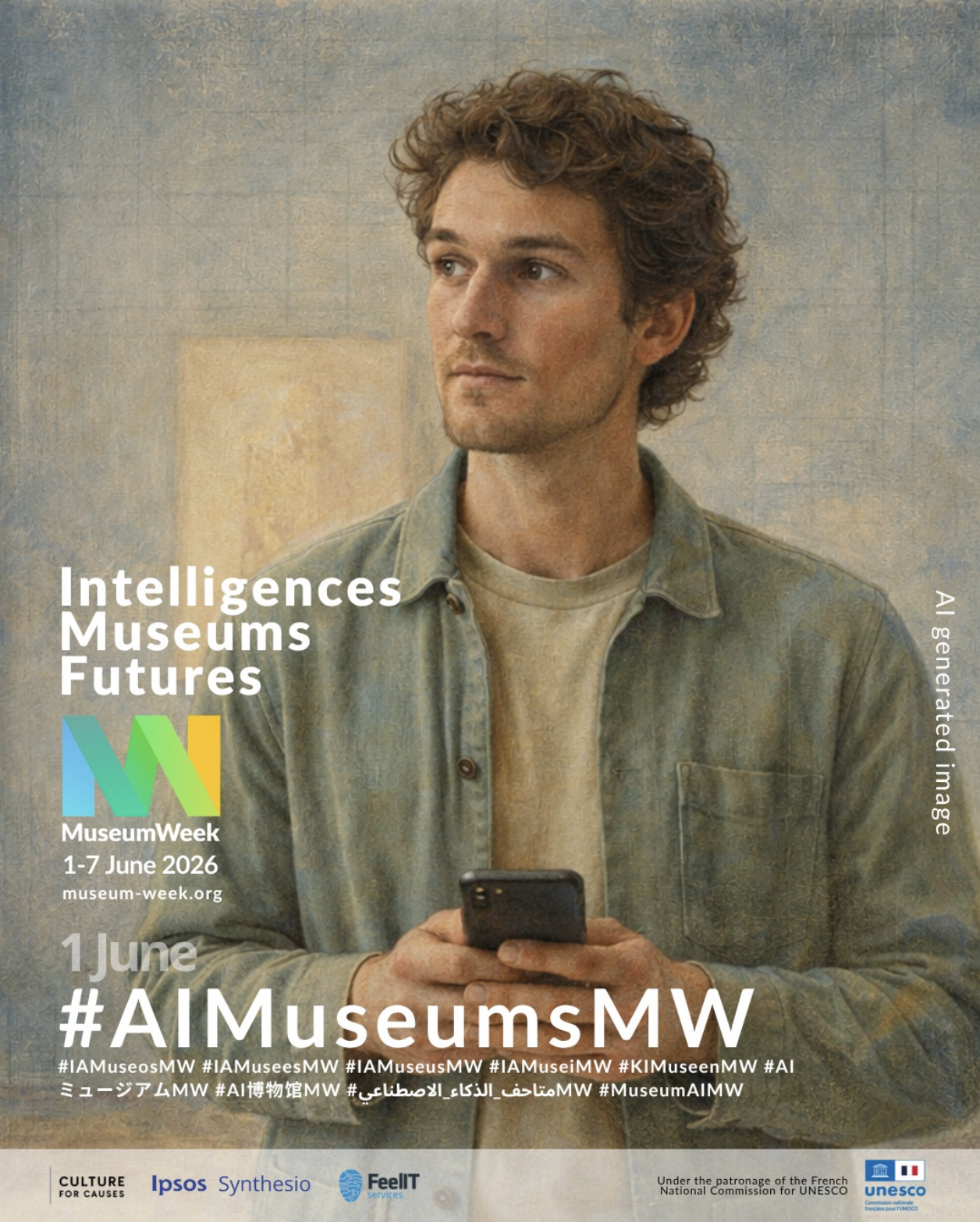
AI video generated from a black and white historical photograph, and an AI-generated faux Impressionist painting of a White man holding a smartphone in an art museum, both from the official MuseumWeek Instagram account.

“AI” itself is a contentious, inaccurate term: it’s sloppy and imprecise, because what is now currently being marketed as “Artificial Intelligence” is primarily one very specific type of what’s better referred to as machine learning and pattern recognition technology. The AI being hyped at present is mostly what’s now known as Generative AI: AI that has scraped – or “been trained on” – copyrighted human creative outputs like visual artwork and writing (usually swiped wholesale from the public internet, which is overwhelmingly biased towards English-language sources and rampant with complicated biases like racism, sexism, homophobia, etc.), in order to be able to spit back computer-generated “content” such as illustrations, research papers, deepfakes, and Spotify music – not actual artwork, but digital approximations of creative “outputs” built from vast online archives that have been mined without permission (not to mention that Generative AI produces a large percentage of “hallucinations” i.e. bullshit simply because it’s programmed to give a confident answer, even if it can’t find a truthful one).

It’s this type of AI that’s being pushed by companies like OpenAI, Microsoft, Meta, and Google, companies who are locked in a desperate race to invent “Artificial General Intelligence” (“AGI” for short): computer technology that is or will be smarter and more capable than human beings. Except no one can actually define what AGI will be precisely, and no one can agree on what the criteria is to determine when the technology actually gets there (“we’ll know it when we see it” is what most Silicon Valley AI pundits tend to say in their defense). All they know is, they think they need to get to AGI as soon as possible, and they think the best and only way to get there is through expansion and scaling: more data centres, more exploited content cataloguing workers in the Global South, more precious minerals mined by children in the Congo, more drinking water to cool their high-powered GPUs.

These are the issues covered brilliantly by technology journalist Karen Hao’s international bestseller Empire of AI: Inside the Reckless Race for Total Domination, recently released in paperback for the first time. Ostensibly, it’s a history of OpenAI, the company responsible for ChatGPT, led by CEO Sam “It also takes a lot of energy to train a human” Altman. Hao’s book uses the drama surrounding the OpenAI board’s 2023 attempt to fire Altman as its emotional lynchpin, structuring the book like a contemporary Netflix binge-fest by beginning at the moment Altman finds out he’s been fired (over Zoom, no less), then flashing back for the rest of the book until eventually revealing the specific circumstances that led to the firing, then ending the book shortly after Altman was reinstated only five days later. In that respect, the book is a gripping page-turner of all-too-human drama, and I found it extremely difficult to put down once I started it.

Except Altman’s story isn’t actually the main point of the book; as Hao alerts readers in her Author’s Note, Altman’s ouster is used as a framework for explaining the mindset of Silicon Valley – specifically, the tech bros currently shoving “AI” down the world’s collective throat – in order to warn the world that the race for AGI is a deeply colonialist, imperialist project that is gutting the Earth’s natural resources and exploiting workers across the Global South, and will do overwhelming damage to us well before it actually functions well enough to have any chance of actually “replacing humans” in the Global North on a large scale.

Hao’s book is no anti-AI screed; as she says herself:

The critiques that I lay out [here] are not by any means meant to dismiss AI in its entirety. What I reject is the dangerous notion that broad benefit from AI can only be derived from–indeed, will ever emerge from–a vision for the technology that requires the complete capitulation of our privacy, our agency, and our world, including the value of our labor and art, toward an ultimately imperial centralisation project.

Through extensive fieldwork in South America and Africa, Hao introduces readers to gig workers across the Global South who are economically exploited into taking slave wage content moderation jobs, forced to endure reading and watching the most horrible examples of physical and sexual violence, to the point that it destroys their mental health, just so that ChatGPT can have a slightly lesser chance of generating offensive content. We meet local activists fighting for the preservation of their access to clean drinking water as Google, Microsoft, Meta, and other tech companies pursue underhanded deals with financially desperate governments to build mega-sized AI gigawatt “campuses” (i.e. data centres) that depend on fresh water for cooling, co-opt local power supplies, and generate unbearable noise pollution for local residents.

Hao’s book drives home a concept that seems extremely difficult for the average (or even generally well-meaning) person to grasp: the idea that “AI” isn’t actually some magical technology that falls naturally down to us from a “Cloud”: in reality, it’s dependent upon a vast physical and human infrastructure and supply chain just like every other technology throughout history, an infrastructure whose devastating impact on the natural world will help bring us to a global water shortage in what some scientists believe to be less than four years from now (the United Nations has already produced a report declaring that Earth entered a “global water bankruptcy” even before the rise of AI’s freshwater-guzzling mega-datacenters).

Beyond a shadow of a doubt, the “AI” being celebrated this MuseumWeek is one of the most fundamental moral issues of our age, even before it gets to the point where it can begin causing massive job losses by replacing humans. AI is, at this very moment, jeopardizing the global economy while killing people and our planet’s natural resources on a vast scale; to uncritically embrace this technology is to sleepwalk into a global disaster that has very little to do with some sort of Terminator/Skynet-like conspiracy theory. As Hao demonstrates in the book, there are many positive uses for AI within the realm of preserving human culture (her detailing of the Te Hiku project in New Zealand to preserve Māori language is particularly persuasive). These are the uses of AI that museums absolutely should be celebrating, not the vapid parlor tricks of Generative AI.

Mounting evidence suggests that using many existing AI products has a net negative impact on the human ability to think, beyond these products’ overwhelming environmental dangers – yet these types of AI are often described as “just another tool” to help our “productivity”, i.e. the Generative AI that tries to think and create for us, rather than machine learning tools that actually do help us to think and create for ourselves. Generative AI is demonstrably not “just another tool”: a hammer doesn’t pollute a town’s water supply, a camera doesn’t have to steal from every picture ever taken in order to capture an image, and a telephone doesn’t need to exploit gig workers in Kenya.

Generative AI is existentially unlike any tool ever created before, and Karen Hao has provided here an impeccably researched, extremely well-written warning sign that every one of us needs to consider as we make decisions on how much to embrace these new apparatuses of empire.

Museum of Portable Sound Rating:
🎧🎧🎧🎧🎧/5

Pros: • Excellent, exciting, well-researched, must-read
Cons: • Too long for the AI-illiterate who desperately need to read it


References

‘Artificial general intelligence’ (2026) Wikipedia. Available at: https://en.wikipedia.org/w/index.php?title=Artificial_general_intelligence&oldid=1356880428 (Accessed: 2 June 2026).

Autry, L.T.S. (no date) La Tanya S. Autry, La Tanya S. Autry. Available at: https://latanyasautry.net (Accessed: 2 June 2026).

Autry, L.T.S. and Murawski, M. (2019) ‘Museums Are Not Neutral: We Are Stronger Together’, Panorama. Available at: https://journalpanorama.org/article/museums-are-not-neutral/ (Accessed: 2 June 2026).

Bishop, C.M. (2006) Pattern Recognition and Machine Learning. Springer. Available at: https://link.springer.com/book/9780387310732 (Accessed: 2 June 2026).

Briski, K. (2025) ‘How Scaling Laws Drive Smarter, More Powerful AI’, NVIDIA Blog, 12 February. Available at: https://blogs.nvidia.com/blog/ai-scaling-laws/ (Accessed: 2 June 2026).

Fehr, D. (2021) Mike Murawski interview – People first! Museums as Agents of Change, Museospace.org. Available at: https://museospace.org/interview-mike-murawski (Accessed: 2 June 2026).

Gerlich, M. (2025) ‘AI Tools in Society: Impacts on Cognitive Offloading and the Future of Critical Thinking’, Societies, 15(1), p. 6. Available at: https://doi.org/10.3390/soc15010006.

Hao, K. (2025) Empire of AI : inside the reckless race for total domination | WorldCat.org. London: Allen Lane. Available at: https://search.worldcat.org/title/1463765262 (Accessed: 2 June 2026).

Harley, R. (2025) Teaching the machines to speak: Māori innovation and the fight for data sovereignty, National Indigenous Times. Available at: https://nit.com.au/03-11-2025/21077/eaching-the-machines-to-speak-maori-innovation-and-the-fight-for-data-sovereignty (Accessed: 2 June 2026).

Hicks, M.T., Humphries, J. and Slater, J. (2024) ‘ChatGPT is bullshit’, Ethics and Information Technology, 26(2), p. 38. Available at: https://doi.org/10.1007/s10676-024-09775-5.

Knight, W. (2026) ‘Using AI for Just 10 Minutes Might Make You Lazy and Dumb, Study Shows’, Wired, 6 May. Available at: https://www.wired.com/story/using-ai-negative-impact-thinking-problem-solving-study/ (Accessed: 2 June 2026).

Kosmyna, N. et al. (2025) ‘Your Brain on ChatGPT: Accumulation of Cognitive Debt when Using an AI Assistant for Essay Writing Task’. arXiv. Available at: https://doi.org/10.48550/arXiv.2506.08872.

MuseumWeek 2026 Program (2026) MuseumWeek.org. Available at: https://www.museum-week.org/museumweek-2026-program (Accessed: 2 June 2026).

Patrick, G. (2025) Can the World Run Out of Water? Water Scarcity Science and Climate Impact Explained, Science Times. Available at: https://www.sciencetimes.com/articles/60964/20251218/can-world-run-out-water-water-scarcity-science-climate-impact-explained.htm (Accessed: 2 June 2026).

Perrigo, B. (2023) Exclusive: The $2 Per Hour Workers Who Made ChatGPT Safer, TIME. Available at: https://time.com/6247678/openai-chatgpt-kenya-workers/ (Accessed: 2 June 2026).

Reuters (2025) IMF says AI investment bubble could burst, comparable to dot-com bubble, Al Jazeera. Available at: https://www.aljazeera.com/economy/2025/10/14/imf-says-ai-investment-bubble-could-burst-comparable-to-dot-com-bubble (Accessed: 2 June 2026).

Shahzad, M.W. (2025) AI is gobbling up water it cannot replace – I’m working on a solution, The Conversation. Available at: https://doi.org/10.64628/AB.fq4jym6j7.

Staff (2016) ‘Exposed: Child labour behind smart phone and electric car batteries’, Amnesty International. Available at: https://www.amnesty.org/en/latest/news/2016/01/child-labour-behind-smart-phone-and-electric-car-batteries/ (Accessed: 2 June 2026).

Staff (2026) World enters era of ‘global water bankruptcy’ | UN News, United Nations. United Nations. Available at: https://news.un.org/en/story/2026/01/1166800 (Accessed: 2 June 2026).

Stryker, C. and Scapicchio, M. (2024) What is Generative AI?, IBM. Available at: https://www.ibm.com/think/topics/generative-ai (Accessed: 2 June 2026).

Tokar, M. (2024) AI Is Just a Tool. Stop Pretending Otherwise., Built In. Available at: https://builtin.com/artificial-intelligence/why-ai-is-a-tool (Accessed: 2 June 2026).

Tully, S.M., Longoni, C. and Appel, G. (2025) ‘Lower Artificial Intelligence Literacy Predicts Greater AI Receptivity’, Journal of Marketing, 89(5), pp. 1–20. Available at: https://doi.org/10.1177/00222429251314491.

‘Web scraping’ (2026) Wikipedia. Available at: https://en.wikipedia.org/w/index.php?title=Web_scraping&oldid=1355278840 (Accessed: 2 June 2026).

When will we run out of water? (no date) When WIll We Run Out Of Water? Airtable. Available at: https://runoutofwater.com (Accessed: 2 June 2026).

Wong, M. (2026) Sam Altman Is Losing His Grip on Humanity, The Atlantic. Available at: https://www.theatlantic.com/technology/2026/02/sam-altman-train-a-human/686120/ (Accessed: 2 June 2026).
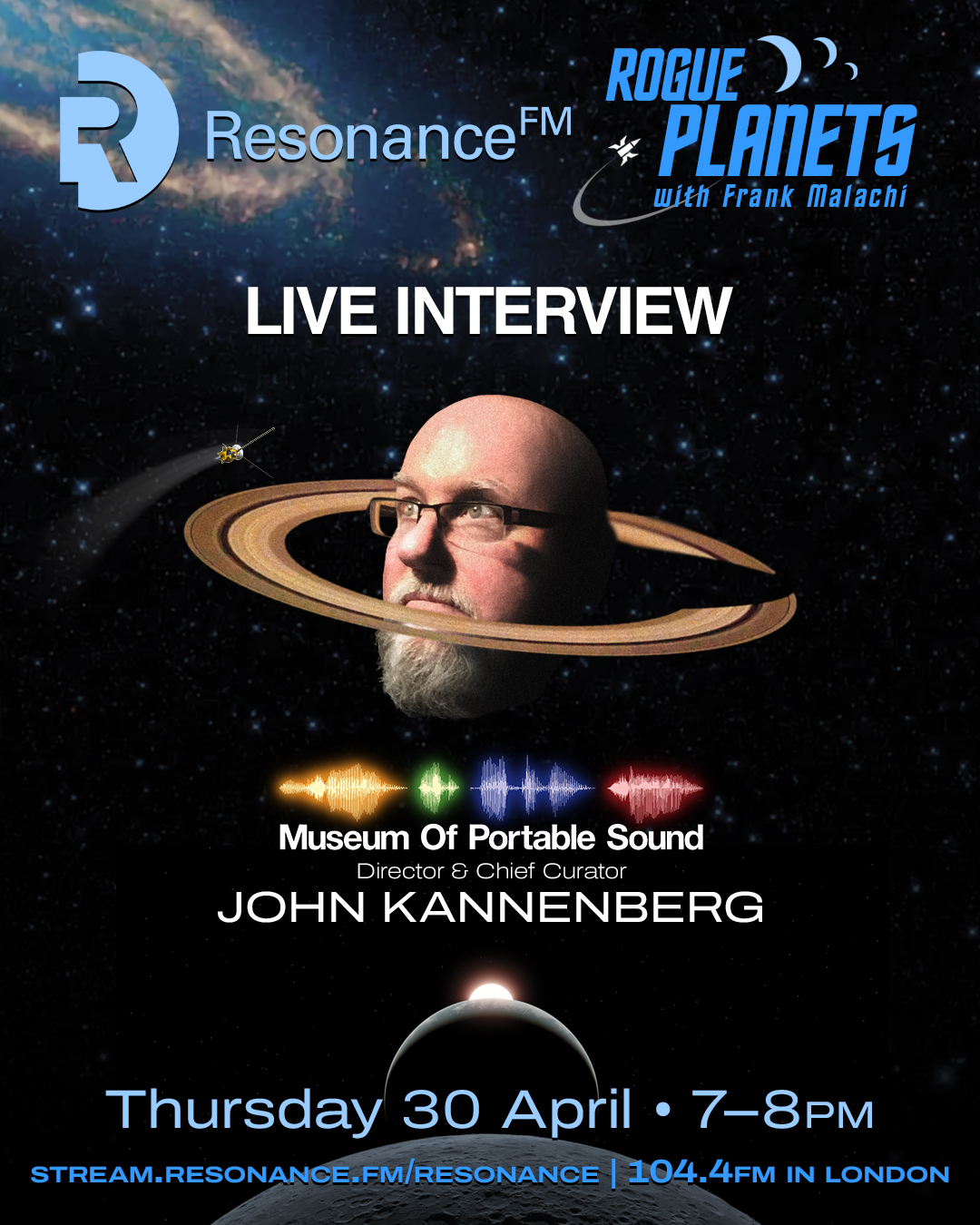
Resonance FM’s Rogue Planets to interview MOPS Director

LONDON – Museum of Portable Sound Director, Chief Curator, and author of A Brief History of Sound Recording John Kannenberg will appear live in the studio at Resonance FM London on the Rogue Planets show with Frank Malachi Thursday 30 April 7-8pm.

The live interview will cover a variety of topics including the history of our museum, our newest book, his field recording work, and other sound-related projects by our Director.

Residents of London can listen in on 104.4FM, while global listeners can hear the show online at the Resonance FM website.

More information about our Director can be found at johnkannenberg.com.

‘A Brief History of Sound Recording’ reviewed by The Wire magazine

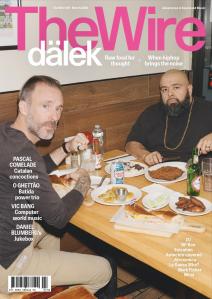
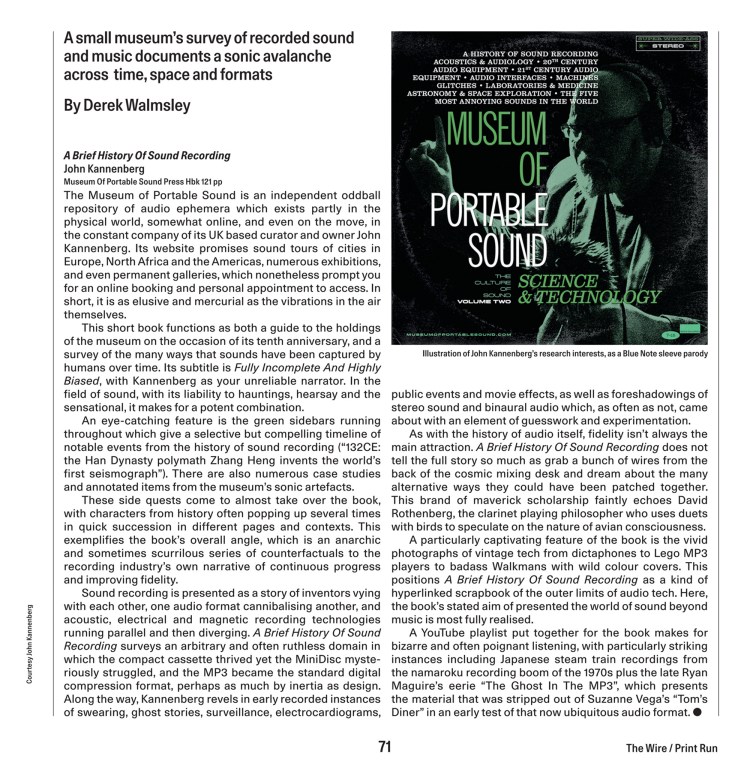
The latest issue of The Wire magazine (no. 505, March 2026) features a 3/4 page review of our new book A Brief History of Sound Recording.

Written by staff writer Derek Walmsley, the review is transcribed below:


A small museum’s survey of recorded sound and music documents a sonic avalanche across time, space and formats
By Derek Walmsley

A Brief History Of Sound Recording
John Kannenberg
Museum Of Portable Sound Press Hbk[sic] 121 pp

The Museum of Portable Sound is an independent oddball repository of audio ephemera which exists partly in the physical world, somewhat online, and even on the move, in the constant company of its UK based curator and owner John Kannenberg. Its website promises sound tours of cities in Europe, North Africa and the Americas, numerous exhibitions, and even permanent galleries, which nonetheless prompt you for an online booking and personal appointment to access. In short, it is as elusive and mercurial as the vibrations in the air themselves.

This short book functions as both a guide to the holdings of the museum on the occasion of its tenth anniversary, and a survey of the many ways that sounds have been captured by humans over time. Its subtitle is Fully Incomplete And Highly Biased, with Kannenberg as your unreliable narrator. In the field of sound, with its liability to hauntings, hearsay and the sensational, it makes for a potent combination.

An eye-catching feature is the green sidebars running throughout which give a selective but compelling timeline of notable events from the history of sound recording (“132CE: the Han Dynasty polymath Zhang Heng invents the world’s first seismograph”). There are also numerous case studies and annotated items from the museum’s sonic artefacts.
These side quests come to almost take over the book, with characters from history often popping up several times in quick succession in different pages and contexts. This exemplifies the book’s overall angle, which is an anarchic and sometimes scurrilous series of counterfactuals to the recording industry’s own narrative of continuous progress and improving fidelity.

Sound recording is presented as a story of inventors vying with each other, one audio format cannibalising another, and acoustic, electrical and magnetic recording technologies running parallel and then diverging. A Brief History Of Sound Recording surveys an arbitrary and often ruthless domain in which the compact cassette thrived yet the MiniDisc mysteriously struggled, and the MP3 became the standard digital compression format, perhaps as much by inertia as design.

Along the way, Kannenberg revels in early recorded instances of swearing, ghost stories, surveillance, electrocardiograms, public events and movie effects, as well as foreshadowings of stereo sound and binaural audio which, as often as not, came about with an element of guesswork and experimentation.

As with the history of audio itself, fidelity isn’t always the main attraction. A Brief History Of Sound Recording does not tell the full story so much as grab a bunch of wires from the back of the cosmic mixing desk and dream about the many alternative ways they could have been patched together. This brand of maverick scholarship faintly echoes David Rothenberg, the clarinet playing philosopher who uses duets with birds to speculate on the nature of avian consciousness.

A particularly captivating feature of the book is the vivid photographs of vintage tech from dictaphones to Lego MP3 players to badass Walkmans with wild colour covers. This positions A Brief History Of Sound Recording as a kind of hyperlinked scrapbook of the outer limits of audio tech. Here, the book’s stated aim of present[ing] the world of sound beyond music is most fully realised.

A YouTube playlist put together for the book makes for bizarre and often poignant listening, with particularly striking instances including Japanese steam train recordings from the Namaroku recording boom of the 1970s plus the late Ryan Maguire’s eerie “The Ghost In The MP3”, which presents the material that was stripped out of Suzanne Vega’s “Tom’s Diner” in an early test of that now ubiquitous audio format. •

The Wire issue 505 is on sale at newsstands and their website now.

Cover of A Brief History of Sound Recording

A Brief History of Sound Recording is available now exclusively on our website!

Museum of Portable Sound Marks Its First Decade Of Operation

Watch our commemorative 10th anniversary video!

FOR IMMEDIATE RELEASE

PORTSMOUTH, UK, 11 November: The Museum of Portable Sound (MOPS) today commemorates the tenth anniversary of its first public event, its Grand Opening Gala which took place at 6:30pm at the London College of Communication, Elephant & Castle, London.

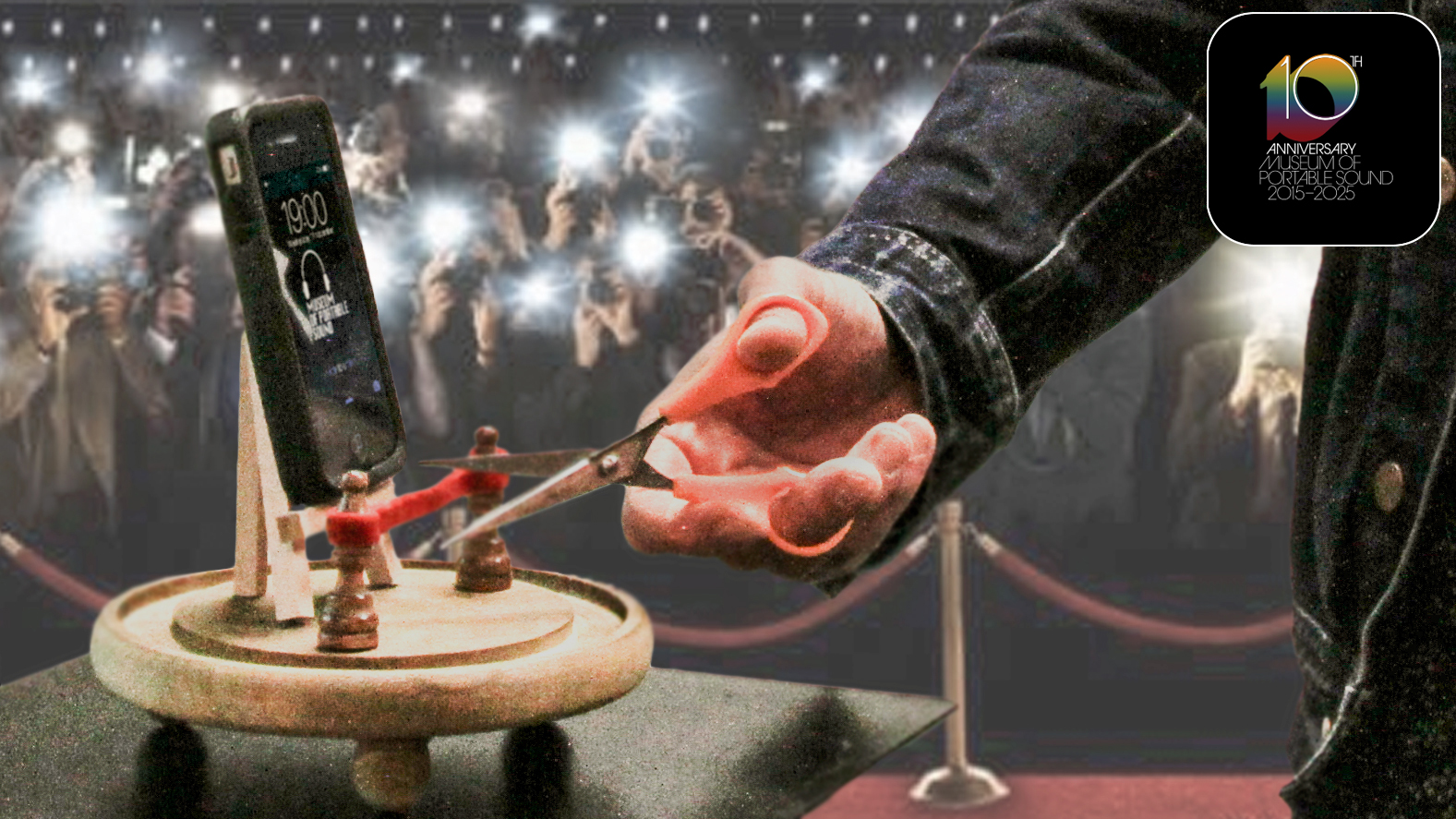
The capacity crowd in attendance witnessed a ribbon cutting ceremony officiated by Professor Angus Carlyle, who used a pair of health and safety-compliant child’s scissors to cut a miniature ribbon across the front of the museum’s iPhone 4S, the only device used to access the museum’s Permanent Collection of Sounds.

What was intended to be a brief Q&A session stretched to 45 minutes, proving the concept of a portable museum of sound was not only viable, but also conceptually capable of rigorous experimentation in the museological display of sounds as objects – as well as a radical upending of 21st century museum practice itself.

Prof. Angus Carlyle cuts the ribbon at the MOPS Grand Opening Gala, 11 November 2015.

John Kannenberg, Director and Chief Curator of the Museum of Portable Sound said:

“What began as a one-off conceptual art project has spawned a decade-long institutional journey resulting in such milestones as a PhD, well over two thousand individual face-to-face museum visitors in person, the establishment of our own international conference, multiple academic and popular publications through Museum of Portable Sound Press, Soundscape™ Barbie®, and a radical reimagining as an online experience due to the COVID-19 pandemic. Our museum has moved from strength to strength as it continues to bring the culture and history of sound beyond music to the world, one listener at a time. All of us here at MOPS look forward to our next decade of operation.”

As part of the celebration, MOPS has also recently announced the publication of its first new gallery guide since 2019: A Brief History of Sound Recording: Fully Incomplete and Highly Biased will be available later this month, breathing new life into the museum’s gallery of sound recording history and, for the first time, allowing one of its galleries’ objects to be publicly accessible online.

END

Further information:

Wallpaper* Magazine Reviews ‘A Brief History of Sound Recording’

Wallpaper* Magazine has published a review of our forthcoming book, A Brief History of Sound Recording: Fully Incomplete and Highly Biased, in a new listicle entitled “14 of the best new books for music buffs.”

“The book is a true labour of love and well worth your time.” – Wallpaper* Magazine

The entire review reads:

The eclectic UK-based Museum of Portable Sound has produced its own ‘Fully Incomplete and Highly Biased’ history of sound recording, written by chief curator Dr John Kannenberg and designed to accompany an online and physical exhibit of objects, ephemera and the sounds themselves.

In addition to over 350 illustrations, the book contains a timeline of sound recording history and marks ten years of the museum. From the invention of stereo to the Dictaphone, black box recorder, compact cassette, mp3 and many more formats both weird and wonderful, the book is a true labour of love and well worth your time.

A Brief History of Sound Recording book now available

Museum of Portable Sound 10th Anniversary Logo
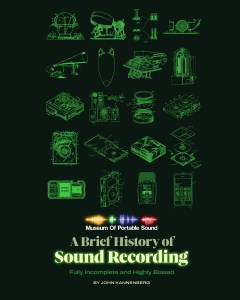
Front cover of the book "A Brief History of Sound Recording: Fully Incomplete and Highly Biased". It is mostly black, with bright green line drawings of twenty sound-related devices from throughout history, beginning with an ancient Chinese seismograf and ending with an iPhone.

FOR IMMEDIATE RELEASE

A Brief History of Sound Recording: Fully Incomplete and Highly Biased
by Dr John Kannenberg

Imprint: Museum of Portable Sound Press
On sale: 27 November 2025
Price: £30.00
Pages: 124
ISBN: 9798347413720

CONTACT:
John
john[at]museumofportablesound.com

“A true labour of love and well worth your time.” —Wallpaper* Magazine, December 2025

Ten years in the making, this unconventional history of audio recording serves as both a guidebook for one of the galleries inside the Museum of Portable Sound (MOPS)–an independent, highly experimental museum founded in 2015 in London–and a standalone history of the development of one of the most profound technologies of the modern era: the ability to record, store, and play back sound. This seismic leap forward in human technology is examined here from multiple (and rarely discussed) angles, focusing as much as possible on uses for sound recording beyond music.

The book’s central focus are thirty six sound recordings from the Permanent Collection of Sounds at MOPS, which can be listened to online while reading along with the book. These recordings, from the years spanning 1860–2001, document the rise of sound recording technology, its peak of technical refinement in the 1980s, and the ironic degradation in the quality of sound recordings as their distribution shifted from record companies to tech giants like Apple and Spotify (and even toy companies) at the end of the twentieth century.

Running concurrently alongside the 36 sound object labels, a Timeline of Sound Recording beginning in the year 138–more than 1,700 years before Thomas Edison’s phonograph–gives global context to the developments highlighted by the gallery’s sounds. More than thirty additional essays, labelled ‘Listening Close-Ups’, delve deeper into specific topics like airplane “black box” recording, Hollywood sound effects, espionage, magnetic tape computer software storage, and the long history of audio streaming on the Internet. Hundreds of full colour photos–including pictures of retro audio devices in the MOPS Physical Objects Collection–illustrate technological and social developments involving the capture and reproduction of sounds.

Through thoughtful curation and, surprisingly, an openly opinionated approach, Dr Kannenberg tackles issues like sound recording’s historical relationships with colonialism and capitalism, as well as modern-day concerns like child slavery and the ongoing corporate exploitation of the Democratic Republic of the Congo’s resources that make our smartphones possible. This is not simply a history of white men and their inventions: this is an accessible introduction to globalisation and the political economy of sound recording.

Readers will come away with new knowledge of how sound recording impacts global cultures in some long overlooked contexts, learning new ways to listen to the world around them.

The book is available exclusively from the Museum of Portable Sound website, https://museumofportablesound.com/briefhistory.

###

ABOUT THE AUTHOR

JOHN KANNENBERG PhD MFA PgC BFA is an artistic researcher investigating sounds as museological and cultural objects; the technologies, beings, and environments that generate or record them; and the cultures of the auditors who listen to them. For more than ten years, he has served as the DIrector and Chief Curator of the Museum of Portable Sound, an institution dedicated to bringing the culture and history of sound beyond music to the world, one listener at a time.

KEYWORDS: audio recording, sound studies, media archaeology, history, museology

Live Museum Tour in New Delhi

NEW DELHI, INDIA — On Saturday, 18 May 2024, Museum of Portable Sound (MOPS) Chief Curator John Kannenberg will lead a live guided tour of the world’s number one portable sound museum for current sound students and the general public at the Sri Aurobindo Centre for Arts & Communication, New Mehrauli Road, Adchini, New Delhi, India.

Beginning at 2:30pm India Standard Time, the online tour will introduce our museum’s unique design and inspiration, and briefly walk through sounds from all four floors of the museum’s Permanent Collection of Sounds. The tour marks the second appearance of the MOPS Chief Curator at the Centre, who first hosted MOPS in May 2023.

For more information, call O: +91 11 2656 1987 | M: +91 9910030136, or visit the Centre’s website.

Sounds Beyond Music Curator’s Talk: Thursday 8 February 2024

Sounds Beyond Music exhibit logo. Includes the taglines 'Selected Objects From The Museum Of Portable Sound' and 'Exhibit & Curator's Talk, University of Portsmouth Library'.
MOPS Director & Chief Curator Dr John Kannenberg during a public talk at the V&A museum, London.
Dr John Kannenberg speaking at the Sonic Boom event at the V&A museum, London, 2019. Photo ©Hydar Dewachi.

Our Director & Chief Curator Dr John Kannenberg will give a Curator’s Talk on Thursday evening, 8 February 2024 at 5:30pm in conjunction with our Sounds Beyond Music exhibit currently on view at the University of Portsmouth Library.

The talk will include a brief introduction to our museum, a listening session of some sounds in our collection, and a walkthrough of the Sounds Beyond Music exhibit of objects from our Physical Objects Collection.

This event is FREE and open to the public.

PLEASE NOTE: non-university community visitors should plan to arrive by 5:15pm & bring a photo ID to obtain a free day pass for entry.

Full entry information at the UoP Library website.

The Radio Tower: Long Island Radio & Television Historical Society Podcast

SAYVILLE, NEW YORK—Our Director was recently interviewed by Chris Kretz of the Long Island Radio & Television Historical Society for an episode of their podcast, The Radio Tower. You can listen to the episode by clicking here or on the image of the player below.

The Historical Society is based around the preservation of the World War I-era Telefunken radio station that was built on Long Island, visited by Tesla & Marconi, and became a technological battleground during the war. They also helped produce a documentary about the radio station, Invisible Threads: From Wireless to War, is streaming on Apple TV.

Sound Matters Symposium Presentation, South Africa

Watch the presentation on our YouTube channel

STELLENBOSCH, SOUTH AFRICA – Our Director was invited to participate in the virtual symposium Sound Matters, a virtual symposium hosted by the South African Research Chair in Science Communication at Stellenbosch University, The Academic Citizen, and the South African Journal of Science.

His presentation ‘Science of Sound, Science as Sound’ was a brief introduction to our museum along with a special guided tour of our Science & Technology wing, which is currently in the midst of a large-scale renovation.

You can watch the presentation above or over at our YouTube channel.

Many thanks to the symposium’s convenors: Professor Mehita Iqani, Dr Nosipho Mngomezulu, and Professor Leslie Schwartz.

Audio.com Podcast featuring our Director

Click here to listen to the podcast at Audio.com

Sound sharing website Audio.com has published a podcast interview conducted by Audio.com’s Ilia Rogachevski with John Kannenberg, our Director & Chief Curator. #RIYL listening to a grumpy old white guy say things about sound, music, and sound art that you probably won’t agree with! Here’s their official summary:

John Kannenberg, founder of the Museum of Portable Sound, discusses his journey into sound and the creation of his unique museum. The museum houses over 325 sounds stored on Kannenberg’s iPhone and can only be visited by appointment. It incorporates elements of performance art and encourages conversations about the role of sound in our lives. Kannenberg emphasizes that his museum is different from a regular playlist as it focuses on the use and meaning of each sound. He sees the museum as a gift for strangers, aiming to change perceptions about sound. The experience crosses over into performance art, with Kannenberg adopting the role of a curator. He believes museums should be more human and accountable, which inspired him to create a personal and interactive museum.

Many thanks to Ilia and Audio.com for their kindness and encouragement! You can listen to the podcast and follow along with a transcript at the podcast page.

The Listening Biennial 2023: Listening Tambayan, Manila, Philippines

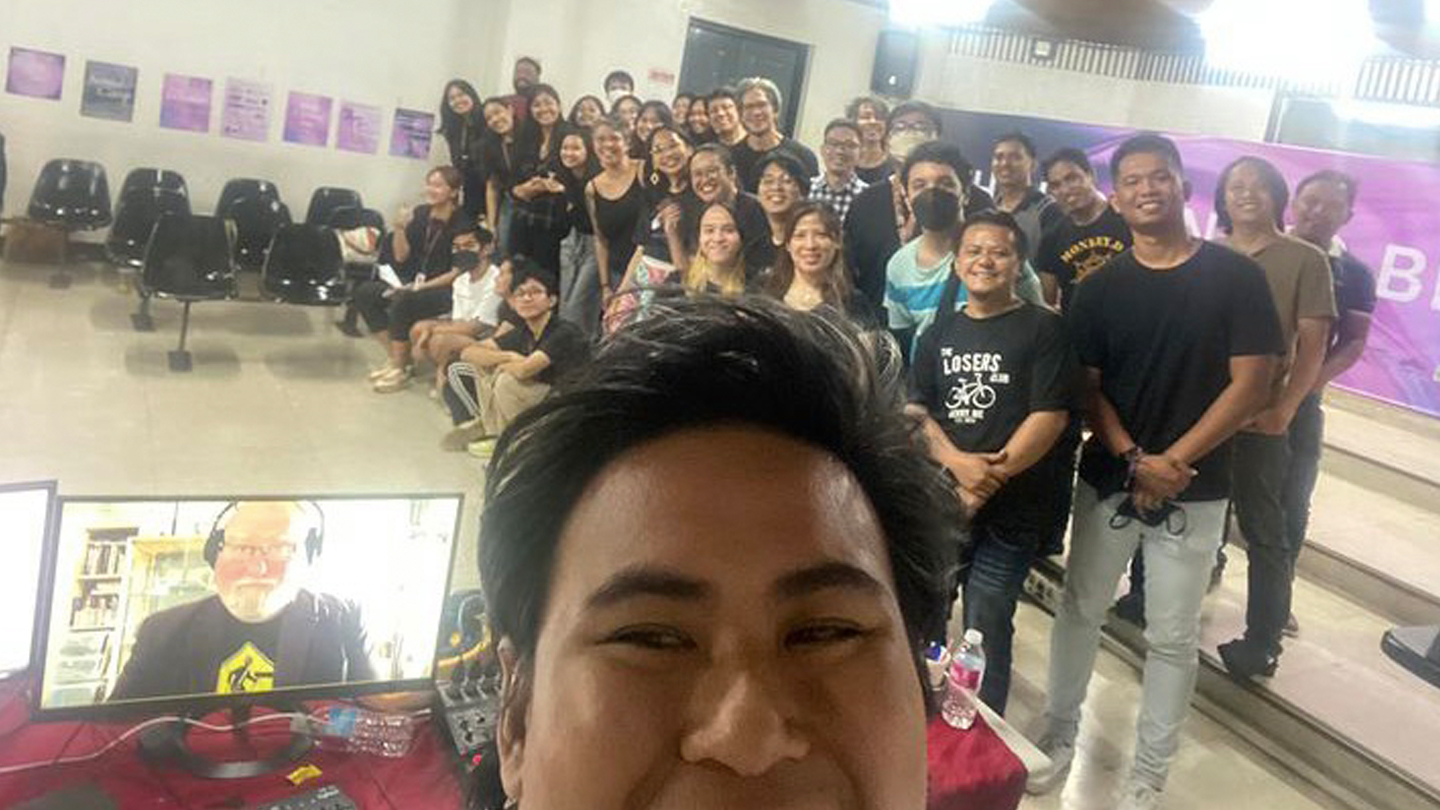
Group photo of about 30 Filipino people inside a recording studio. One young man's head is very large in the middle foreground; he is taking a group selfie. On a table behind him is a computer monitor displaying our Director on a Zoom video call, wearing headphones, sitting in his office in Portsmouth, UK.
Everyone involved in the recording of today’s Listening Tambayan episode poses for a group photo along with our Director (on computer monitor in foreground)

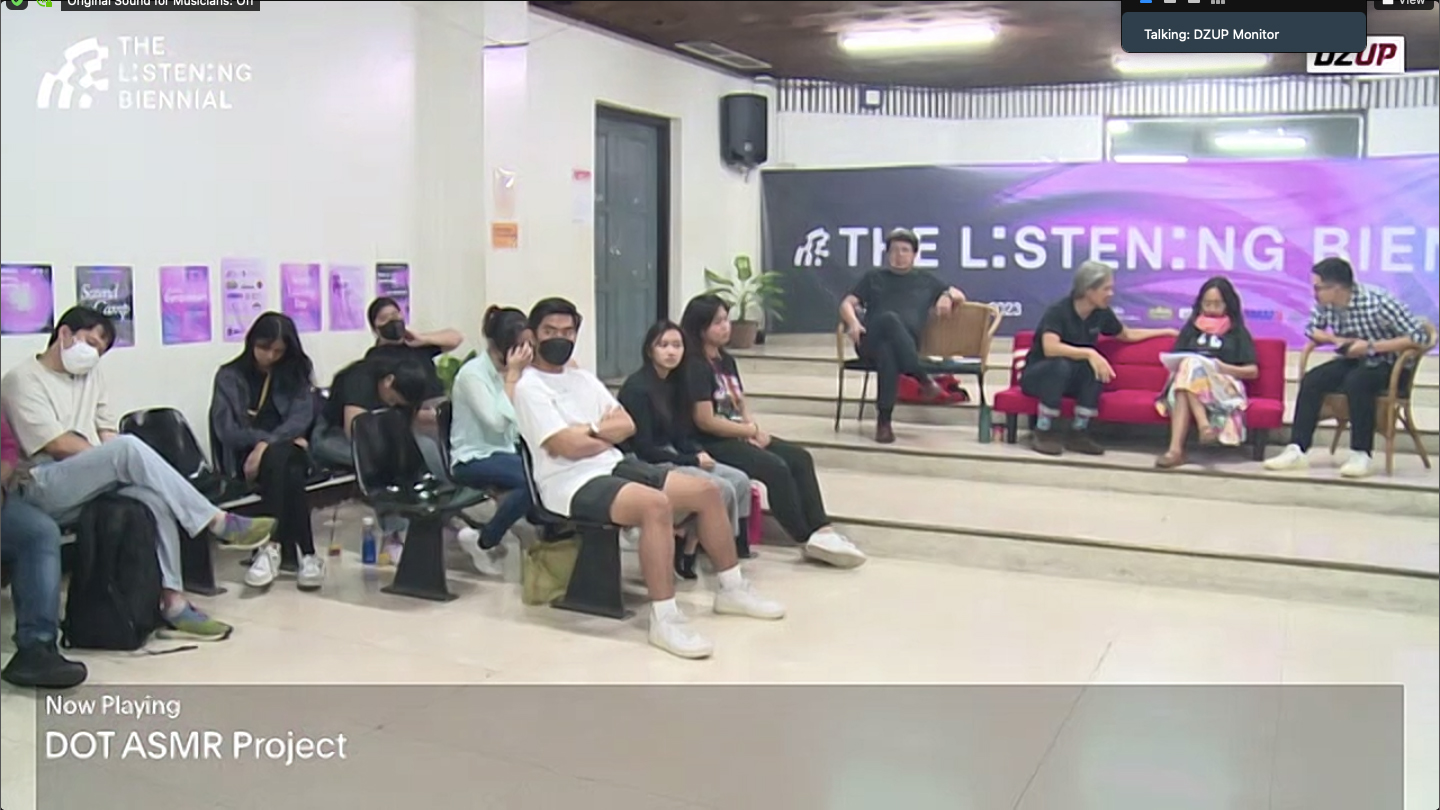
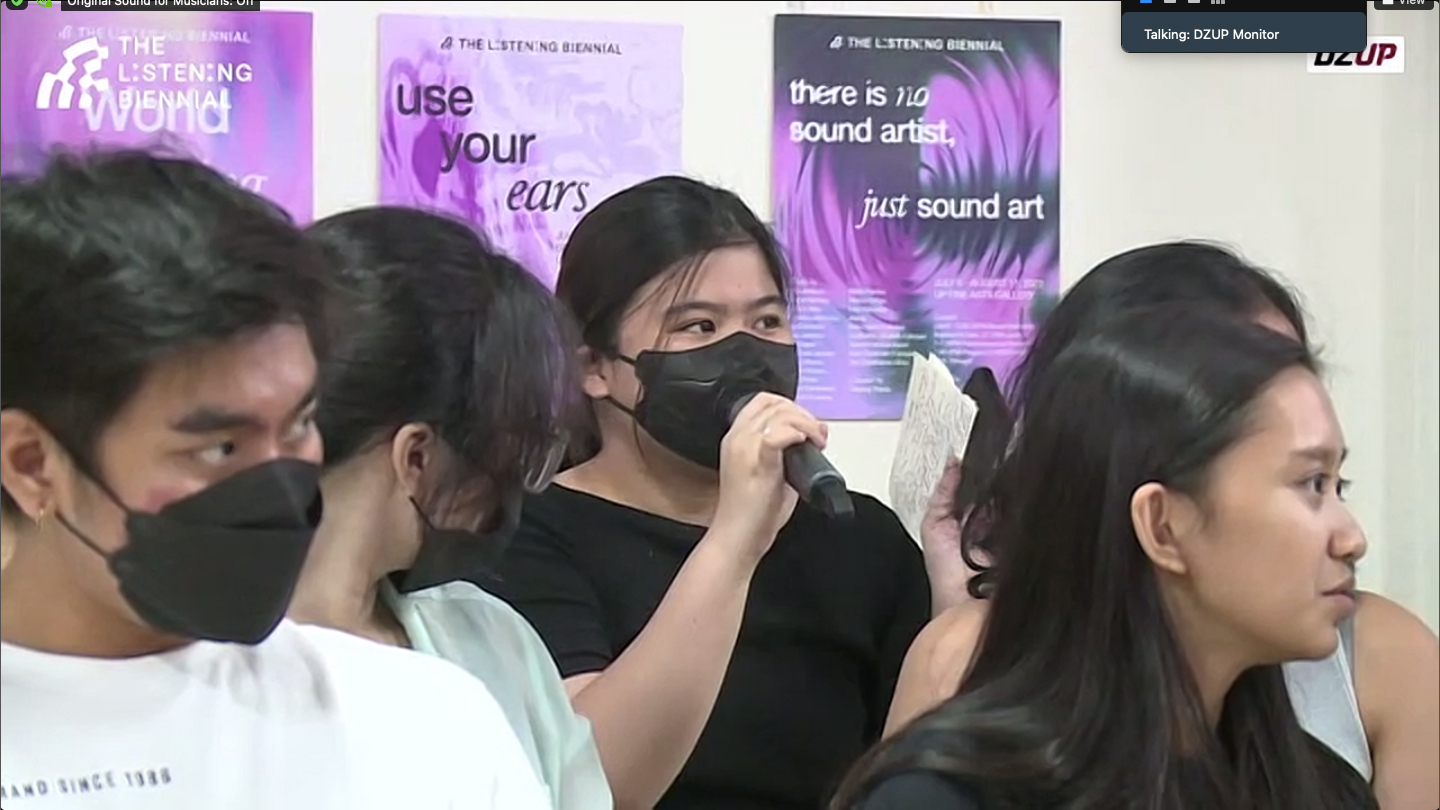
Our Director presented a pre-recorded guided tour of our museum and participated in a live discussion via Zoom today in Manila, Philippines as part of the Listening Biennial 2023, a worldwide symposium, exhibition and series of events from 6 July – 8 August.

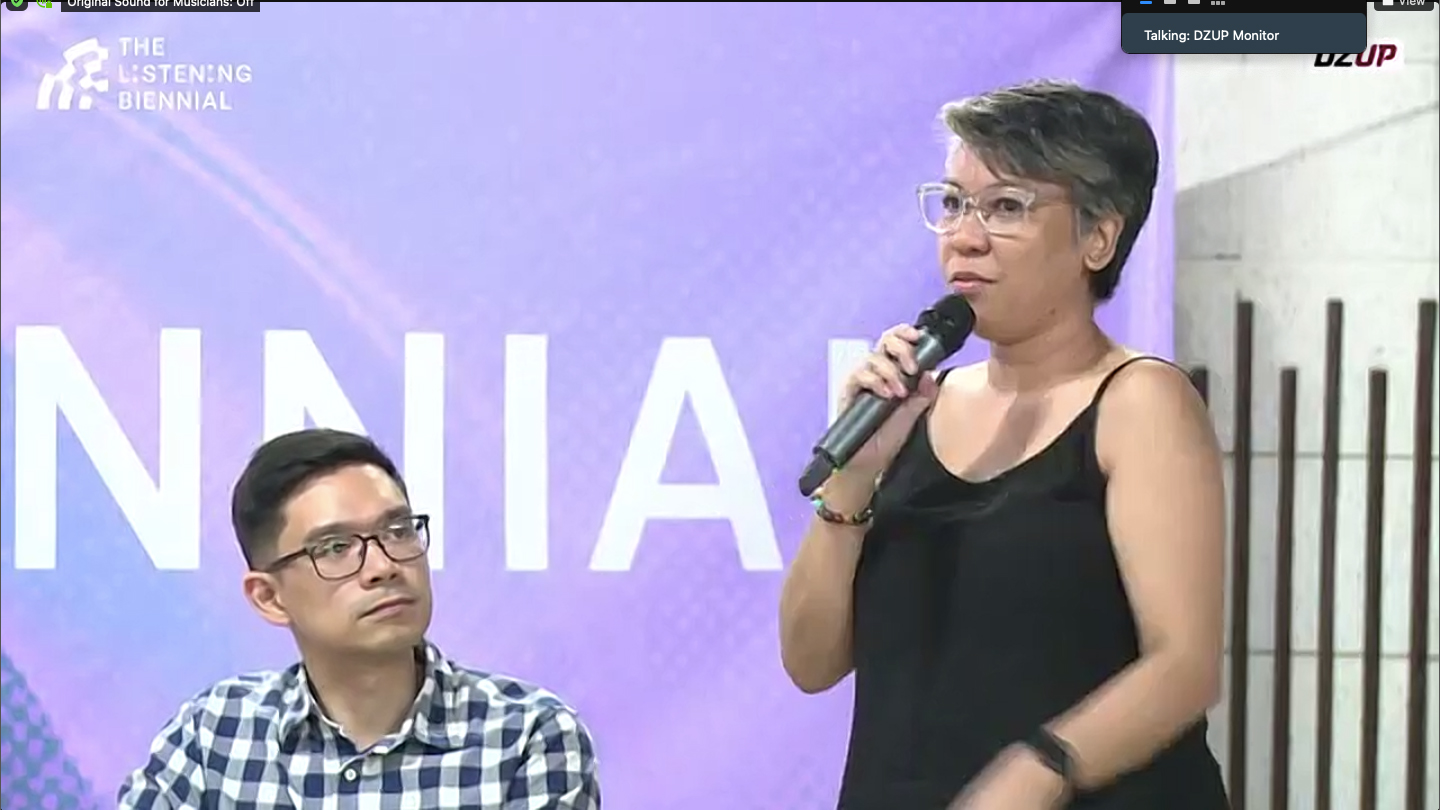
Curated by Filipina curator Dayang Yraola, the Listening Tambayan is one of the many events making up the Inter-Asia Plus branch of the Biennial. A series of six Tambayan episodes are being recorded and rebroadcast over the course of the month-long event. Today’s themed episode, Listening to a Record, also saw presentations by Manila’s DOT ASMR Project and composer Robin Rivera. The session was hosted by Pat Caranza.

The episode will be broadcast via DZUP on Facebook and Youtube 24 July, 10AM-1PM Philippines time (3AM-6AM London time).

The pre-recorded Guided Tour video is available to watch on our YouTube channel.

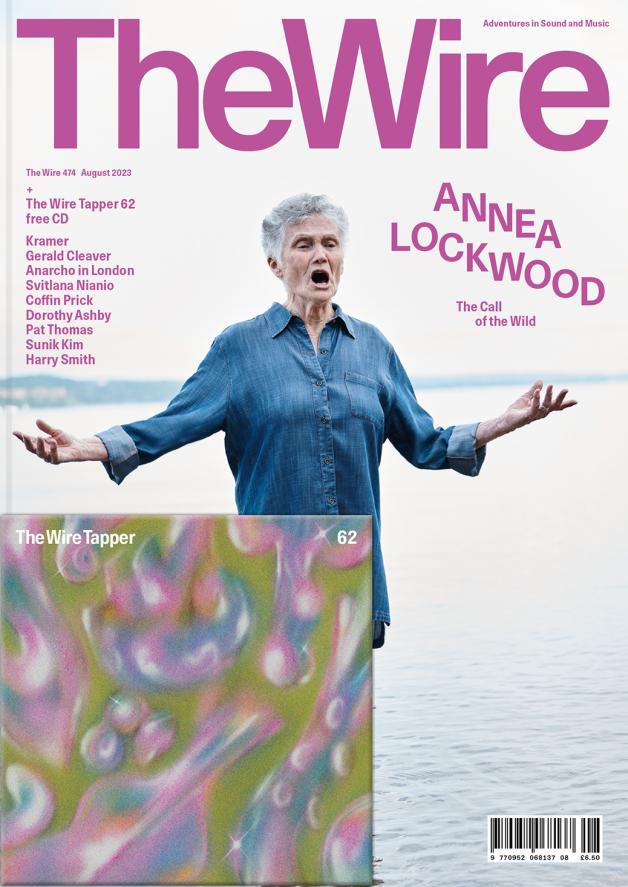
The Wire Issue 474 Review

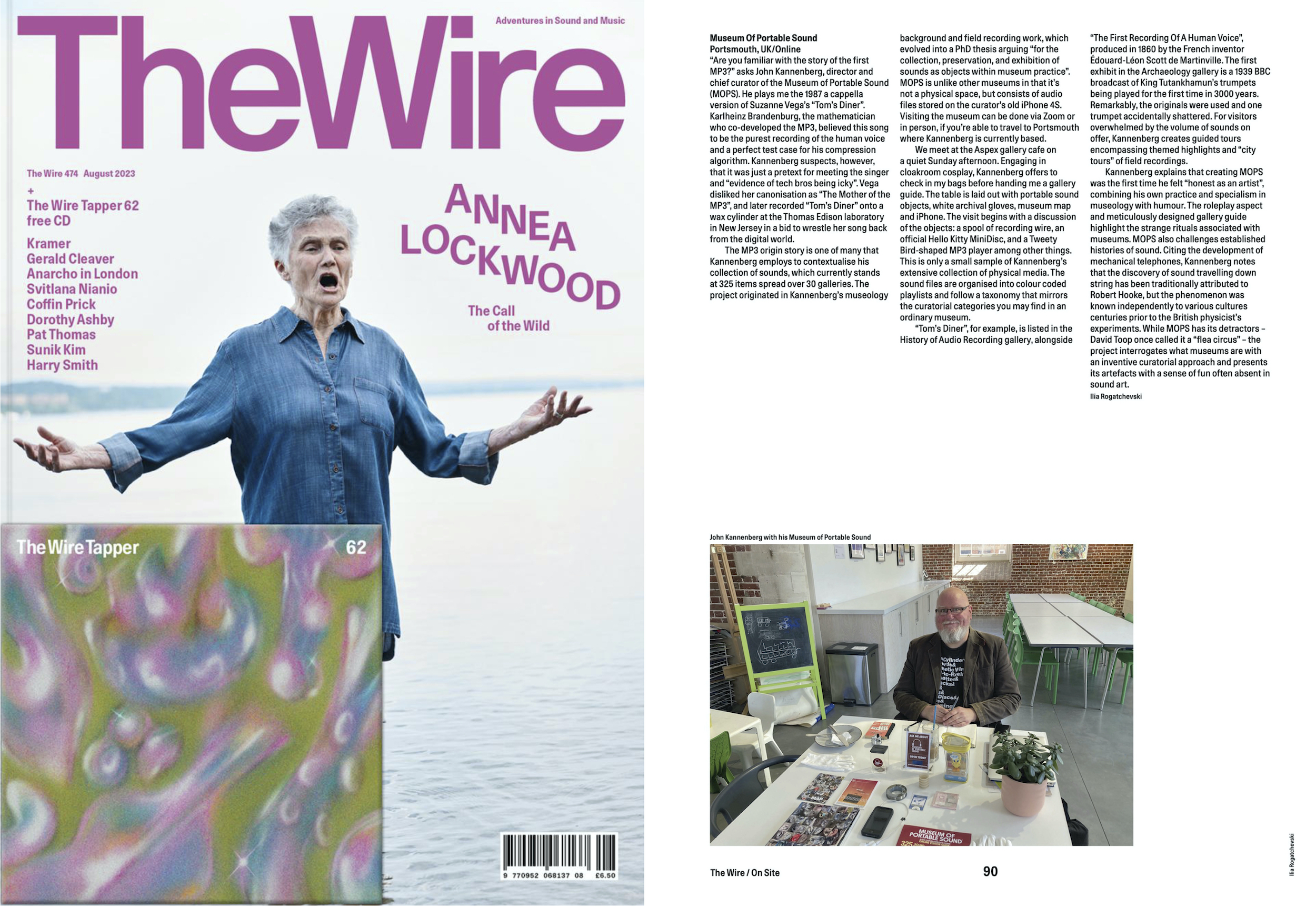
The current issue of the London experimental music magazine The Wire (issue 474, August 2023) contains a full-page review of our museum written by Ilia Rogatchevski, who visited our museum both online and in-person in order to research the piece. The text reads:

“Are you familiar with the story of the First MP3?” asks John Kannenberg, director and chief curator of the Museum of Portable Sound (MOPS). He plays me the 1987 a cappella version of Suzanne Vegas “Tom’s Diner.” Karlheinz Brandenburg. the mathematician who co-developed the MP3, believed this song to be the purest recording of the human voice and a perfect test case for his compression algorithm. Kannenberg suspects, however, that it was just a pretext for meeting the singer and “evidence of tech bros being Icky”. Vega disliked her canonisation as “The Mother of the MP3” and later recorded “Tom’s Diner” onto a wax cylinder at the Thomas Edison laboratory in New Jersey in a bid to wrestle her song back from the digital world.

The MP3 origin story is one of many that Kannenberg employs to contextualise his collection of sounds. which currently stands at 325 items spread over 30 galleries. The project originated in Kannenberg’s museology background and field recording work, which evolved into a PhD thesis arguing for “the collection, preservation, and exhibition of sounds as objects within museum practice”.

MOPS is unlike other museums in that it’s not a physical space, but consists of audio files stored on the curator’s old iPhone 4S. Visiting the museum can be done via Zoom or in person, if you’re able to travel to Portsmouth where Kannenberg is currently based. 

“MOPS interrogates what museums are with an inventive curatorial approach and presents its artefacts with a sense of fun often absent in sound art.”

We meet at Aspex gallery café on a quiet Sunday afternoon. Engaging in cloakroom cosplay, Kannenberg offers to check in my bags before handing me a gallery guIde. The table Is laid out with portable sound objects, white archival gloves, museum map and iPhone. The visit begins with a discussion of the objects: a spool of recording wire, an official Hello Kitty MiniDisc, and a Tweety Bird-shaped MP3 plaver among other things. This is only a small sample of Kannenberg’s extensive collection of physical media. The sound files are organised into colour-coded playlists and follow a taxonomy that mirrors the curatorial categories you may find in an ordinary museum.

“Tom’s Diner” for example, is listed in the History of Audio Recording gallery, alongside “The First Recording Of A Human Voice” produced in 1860 by French inventor Édouard-Léon Scott de Martineville. The first exhibit in the Archaeology gallery is a 1939 BBC broadcast of kind Tutankhamun’s trumpets being played for the first time in 3000 years. Remarkably, the originals were used and one trumpet accidentally shattered. For visitors overwhelmed by the volume of sounds on offer, Kannenberg creates guided tours encompassing themed highlights and “city tours” of field recordings.

Kannenberg explains that creating MOPS was the first time he felt “honest as an artist”, combining his own practice and specialism in museology with humour. The roleplay aspect and meticulously designed gallery guide highlight the strange rituals associated with museums. MOPS also challenges established histories of sound. Citing the development of mechanical telephones, Kannenberg notes that the discovery of sound travelling down string has been traditionally attributed to Robert Hooke, but the phenomenon was known independently to various cultures centuries prior to the British physicist’s experiments. While MOPS has its detractors – David Toop once called it a “flea circus” – the project interrogates what museums are with an inventive curatorial approach and presents its artefacts with a sense of fun often absent in sound art.

Ilia Rogatchevski

The Wire issue 474 is on sale now in newsstands and on their website.

Decolonising Sonic Heritage Spaces

Knowledge Exchange Workshop, City, University of London

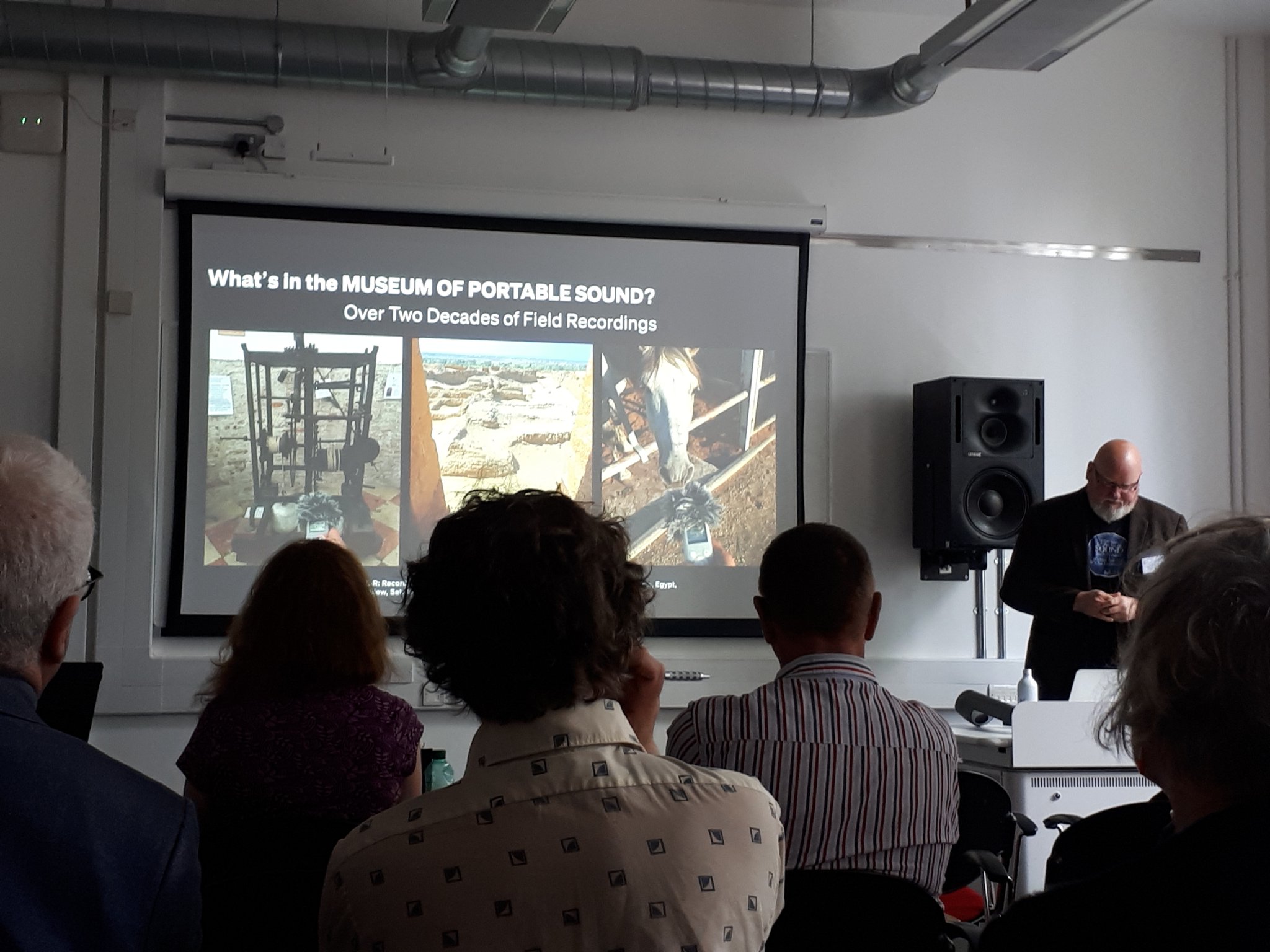
London, 19 June 2023—Our Director has participated in the Decolonising Sonic Heritage Spaces knowledge exchange workshop at City, University of London convened by Dr Maria Mendonça (Kenyon College, US/City) and Professor Laudan Nooshin (City).

Our Director begins his presentation. Photo courtesy Mariana López.

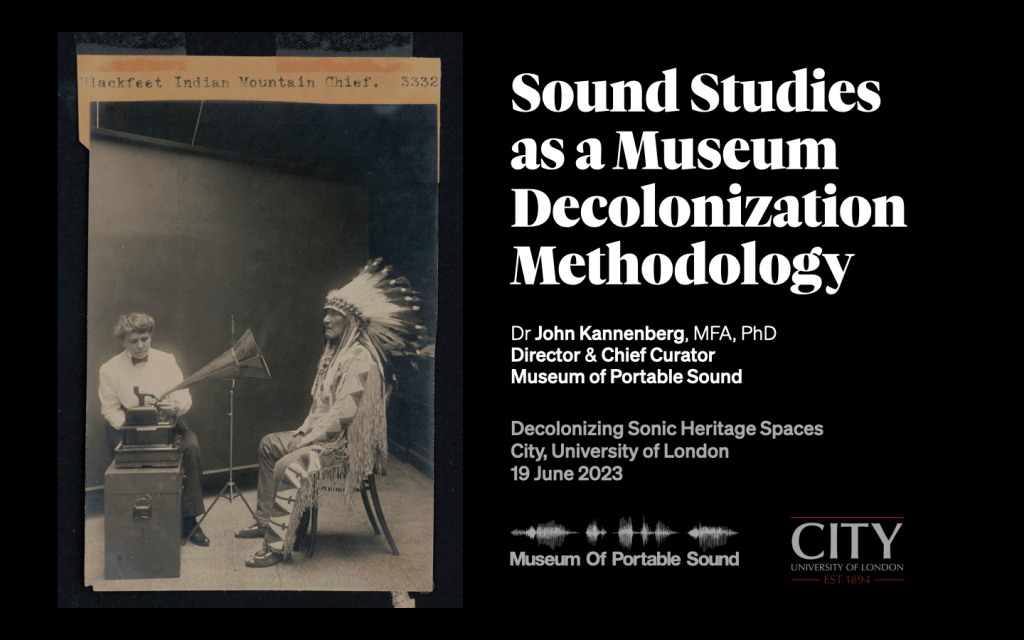
His morning presentation, Sound Studies as a Museum Decolonisation Methodology, discussed four examples of how our museum has attempted to foreground alternative histories of sound:

ABSTRACT: In the early 2000s, a group of academics sought to establish sound studies as an academic discipline analogous to visual culture, a body of work that could interrogate the so-called ‘history of sound’ as a wider cultural study of ‘sound beyond music’ (Mansell, 2021). As sound studies has increasingly been absorbed into the fields of musicology and ‘sound art’, this initial desire to explore sound’s wider cultural connections via historical analysis has struggled to remain at the fore of the discipline as more scholars embrace an attitude of ‘musical exceptionalism’ (Devine, 2019) that confers a greater importance to musicological histories. In following a more ‘traditional’ sound studies approach – beyond just music – the Museum of Portable Sound (MOPS), a small independent museum in Portsmouth, UK, has attempted to deconstruct accepted histories of sound rooted in 19th century white European and American perspectives. By presenting sounds as museum objects, MOPS uses traditional museological taxonomies to offer visitors ways of thinking about sounds, their histories and auditors, that spotlight unexpected stories of how attitudes supposedly relegated to the past including colonialism, white supremacy, gender inequality, institutionalised racism, and homophobia continue to echo throughout contemporary life to the present day.   

References:
Devine, Kyle. Decomposed: The Political Ecology of Music. Cambridge, MA: MIT Press, 2019.
Mansell, James. ‘Historical Acoustemology: Past, Present, and Future’. Music Research Annual, no. 2 (2021): 1–19.

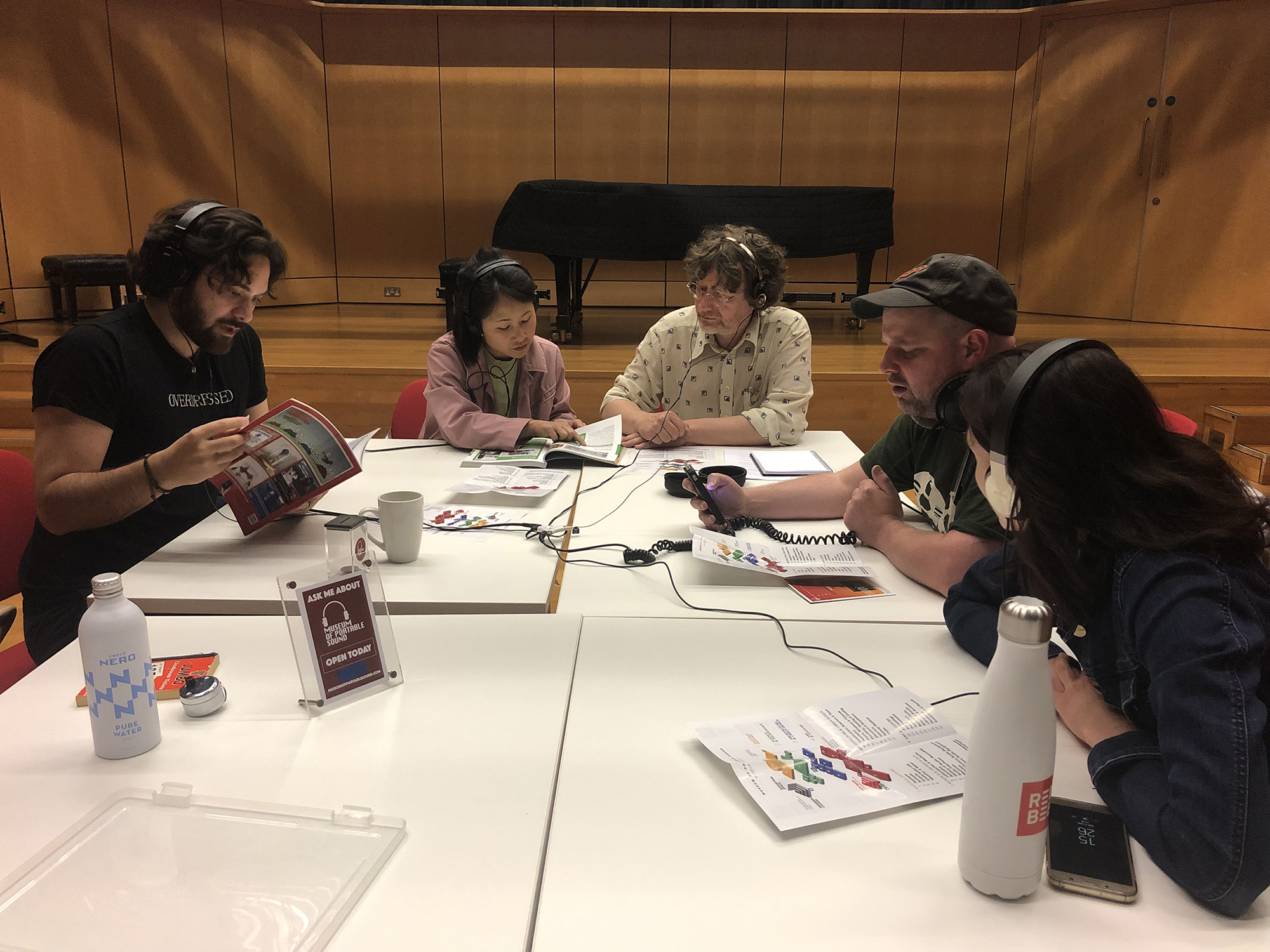
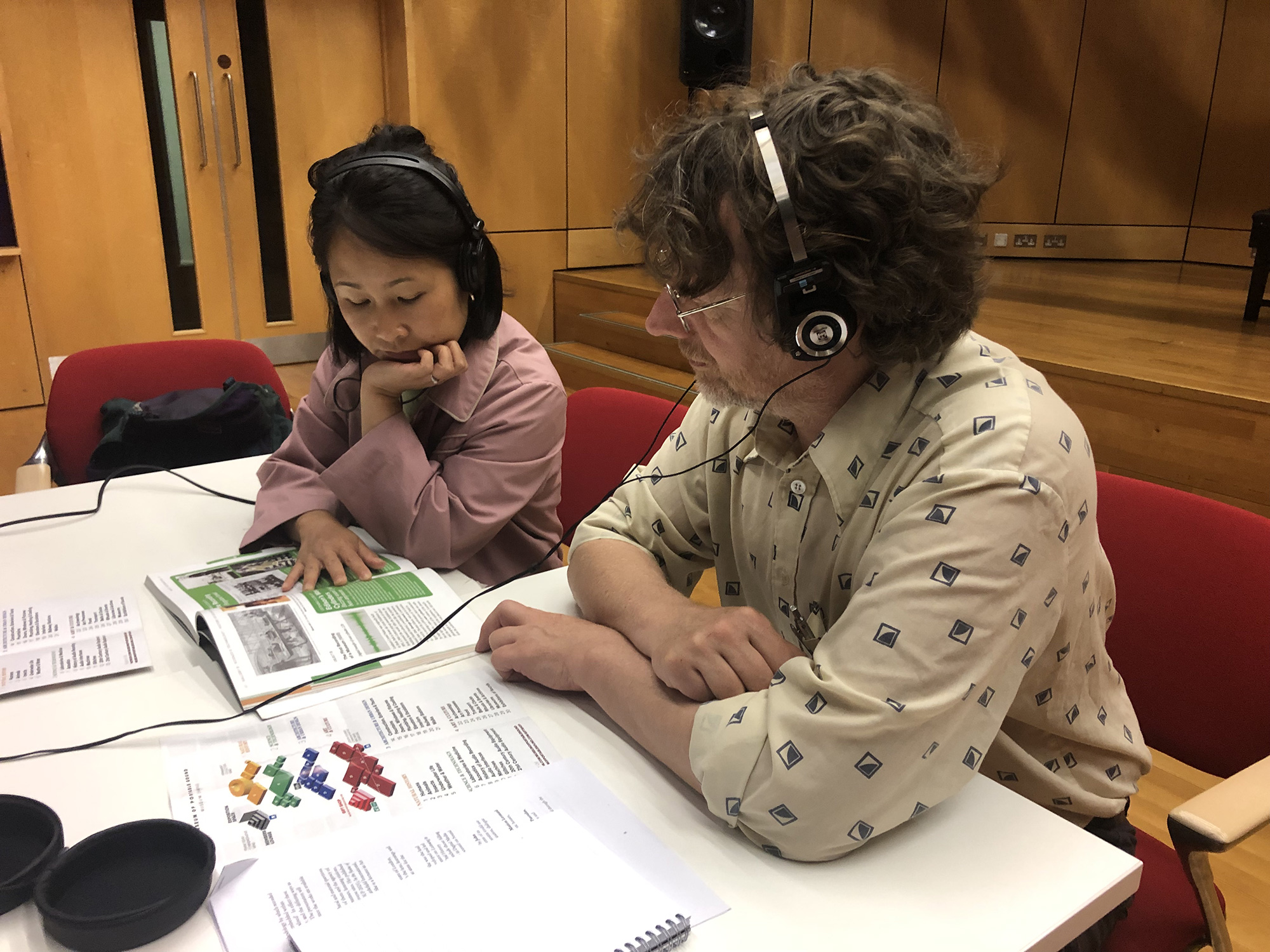
In the afternoon, a breakout session provided an opportunity for a small group of workshop attendees to participate in a group visit to our museum.

You can download a PDF file of slides from our Director’s presentation below.

In Person Visits Now Booking

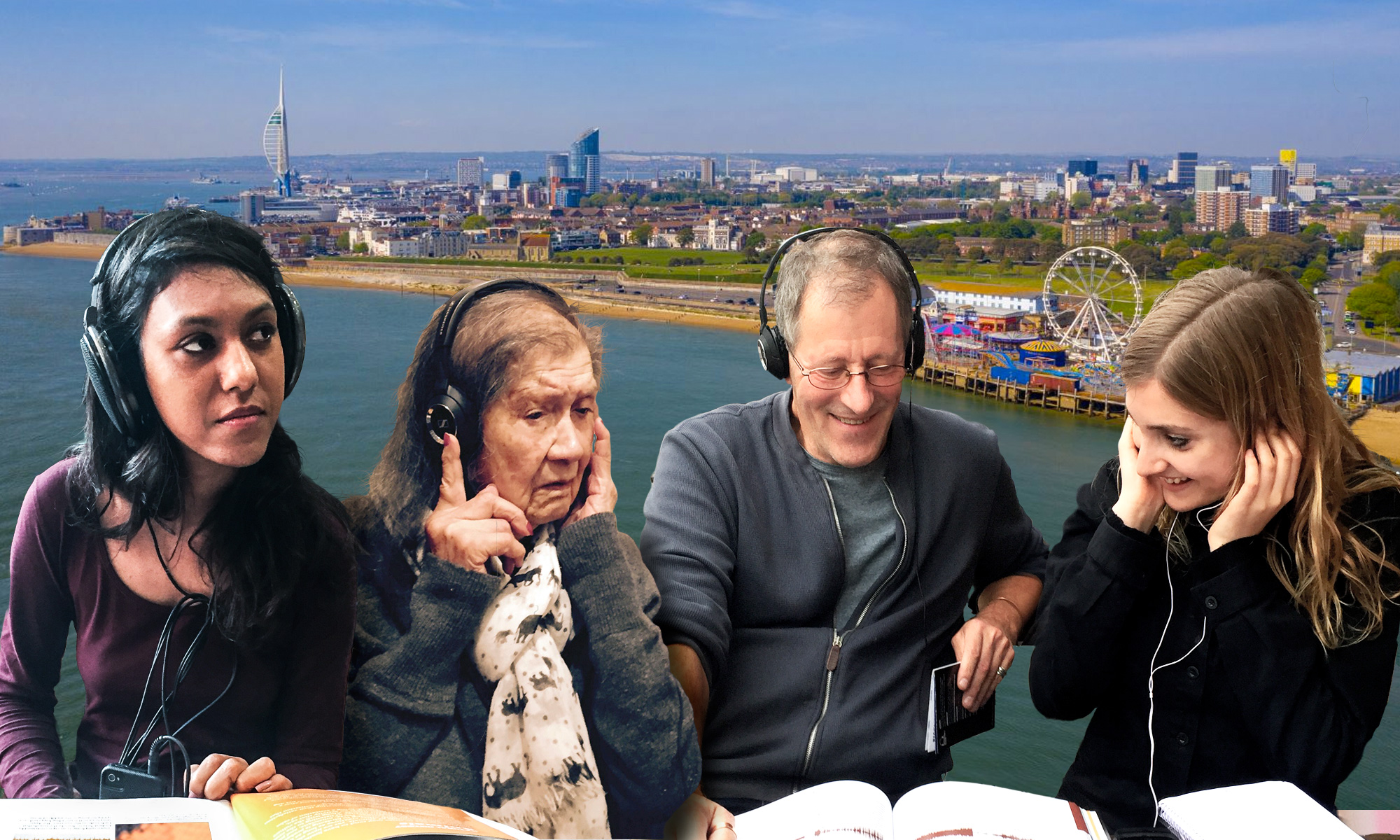
The shoreline of Southsea, Portsmouth, UK is seen behind closeups of several people wearing headphones while listening, smiling, and gesturing during visits to the Museum of Portable Sound.

SOUTHSEA, PORTSMOUTH, UK — The Museum of Portable Sound is pleased to announce that it is officially back open for in person visits.

Based in Southsea, UK, it is easiest to book in person visits there. However, since the museum is portable, we are able to bring it along wherever our Director and Chief Curator travels.

If you are interested in booking an In Person Visit, please use our Contact Form to make arrangements.

Please note that In Person Visits in Southsea are subject to the same ticketing fees as our Online Visits.

In Person Visits in locations outside of Southsea are available but may require additional fees depending on the desired location. Contact us with any questions and we will be happy to discuss how we can bring our museum to you.

Need a refresher on how our In Person Visits work? Take 2 minutes to watch this video!

Our 2,000th Visitor!

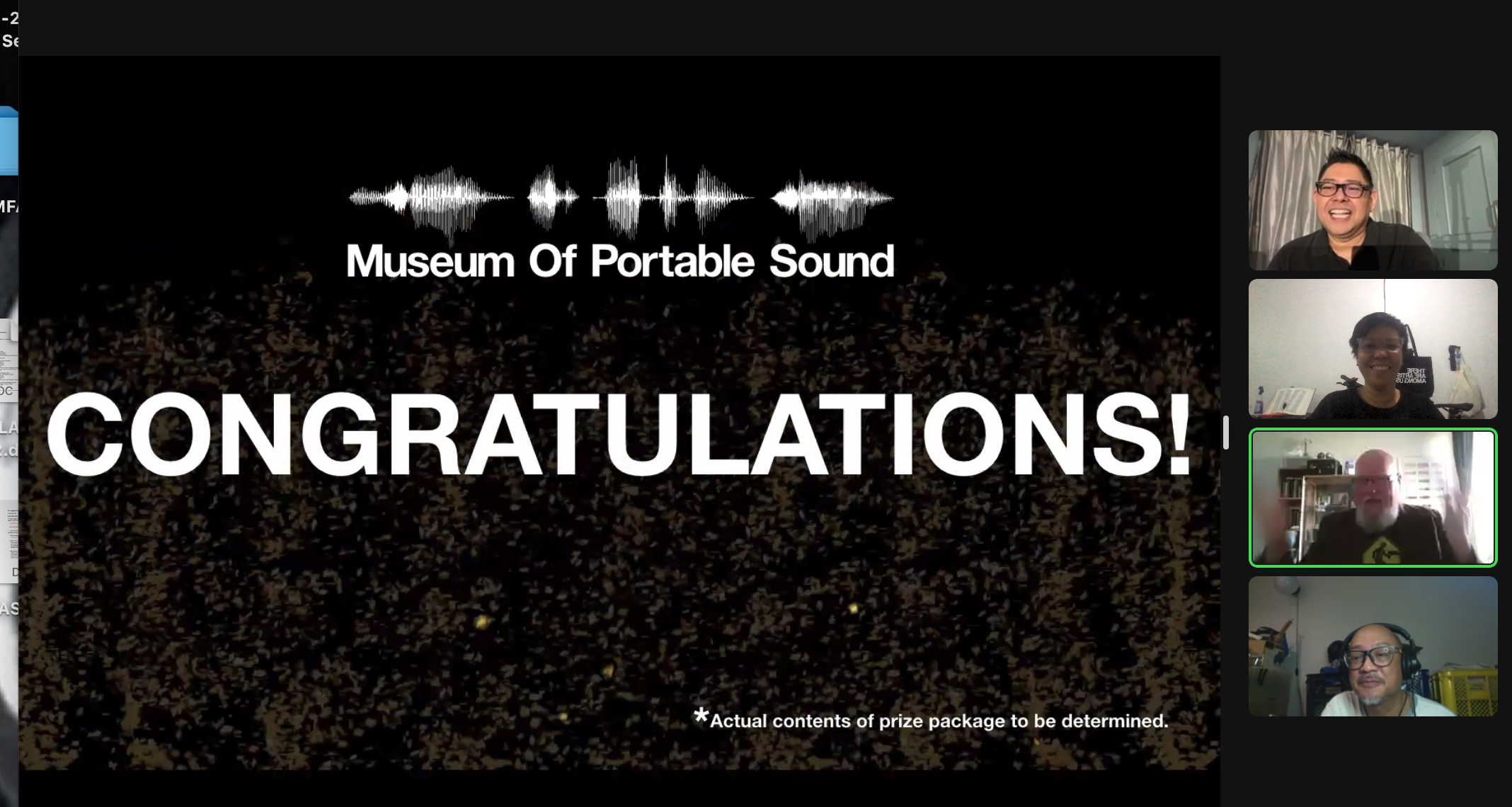
A screenshot of the Zoom meeting during which we welcomed our 2,000th visitor, all the way from Manila, the Philippines!
The moment we announced one of today’s three online visitors was the lucky 2,000th visitor!

MUSEUM OF PORTABLE SOUND LABORATORIES, SOUTHSEA – This morning we welcomed a group of three online visitors to our museum who took a guided tour. As a result:

• Today we welcomed our first visitors of 2023;

• Today we welcomed our first visitors based in the Philippines;

• Today we welcomed the 2,000th person to visit our museum since it opened on 11 November 2015!

Curator, scholar, artist and 2,000th Museum of Portable Sound visitor Dayang will receive a package of FABULOUS PRIZES commemorating this milestone in our institution’s history.

We’re absolutely thrilled to finally reach this milestone in the museum’s history, and the fact that this was a fantastic group of artists and academics from universities in Manila made it even more enjoyable. This group was so engaged, curious, and eager to discuss the world of sound that the time just flew by.

This visit acted as a dry run for our upcoming appearance this summer at the second Listening Biennial, where we will offer a guided tour as part of the Biennial’s events taking place in Manila.

We can’t wait to deliver our 2,000th visitor’s fabulous prize package, which we’ll post about once it’s all packed and ready to go!

MOPS Director Talks Death of the iPod on Sky News

MOPS Director John Kannenberg, wearing a pair of original iPod earbuds, was interviewed by Sky News correspondent Inzamam Rashid.

LIVERPOOL/SOUTHSEA – Museum of Portable Sound Director John Kannenberg appeared on the 10 o’clock News on Sky News last night as part of a three minute segment marking the death of the iPod.

Apple announced on Tuesday, 10 May that it would cease production of the 7th generation iPod Touch, the last remaining model of iPod still manufactured by the home computing and electronics giant.

Sky News correspondent Inzamam Rashid in Liverpool commemorated the end of the line for the iPod, including a brief statement by our Director about the iPod’s rapid expansion beyond its original remit as a portable sound device to the all-in-one multimedia machine it became before Apple made its own signature product redundant with the introduction of the iPhone in 2007:

Only three years after the original iPod, Apple added video functionality…which gave everyone a little portable television that they carried with them everywhere.”

While it would have been nice if our Director had said something about sound instead of video, we’ll take what we can get.

The segment ends with two views of our museum’s Physical Objects Collection, including a small display of selections from our iPod–related holdings. Of interest to long time followers of our museum is a small ‘easter egg’ included in the first shot: just barely visible behind our packaged 1st gen iPod Shuffle stands the iPhone TC, a tin can telephone we first reported on back on 1 April this year.

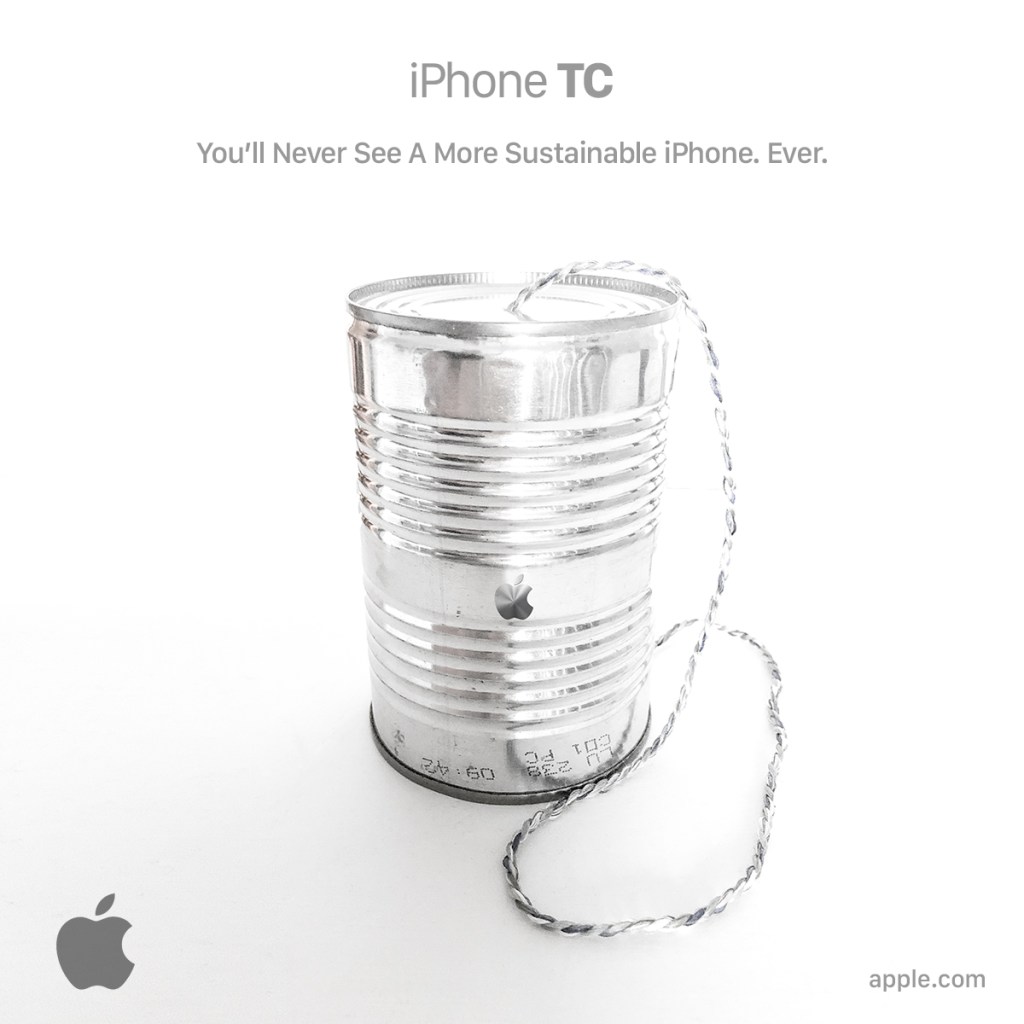
The iPhone TC, Apple’s “most sustainable iPhone ever”, appearing on Sky News at 10pm last night.
The original iPhone TC advert we published as an April Fool’s Day joke earlier this year.

Science Museum in London Donates Object to Museum of Portable Sound

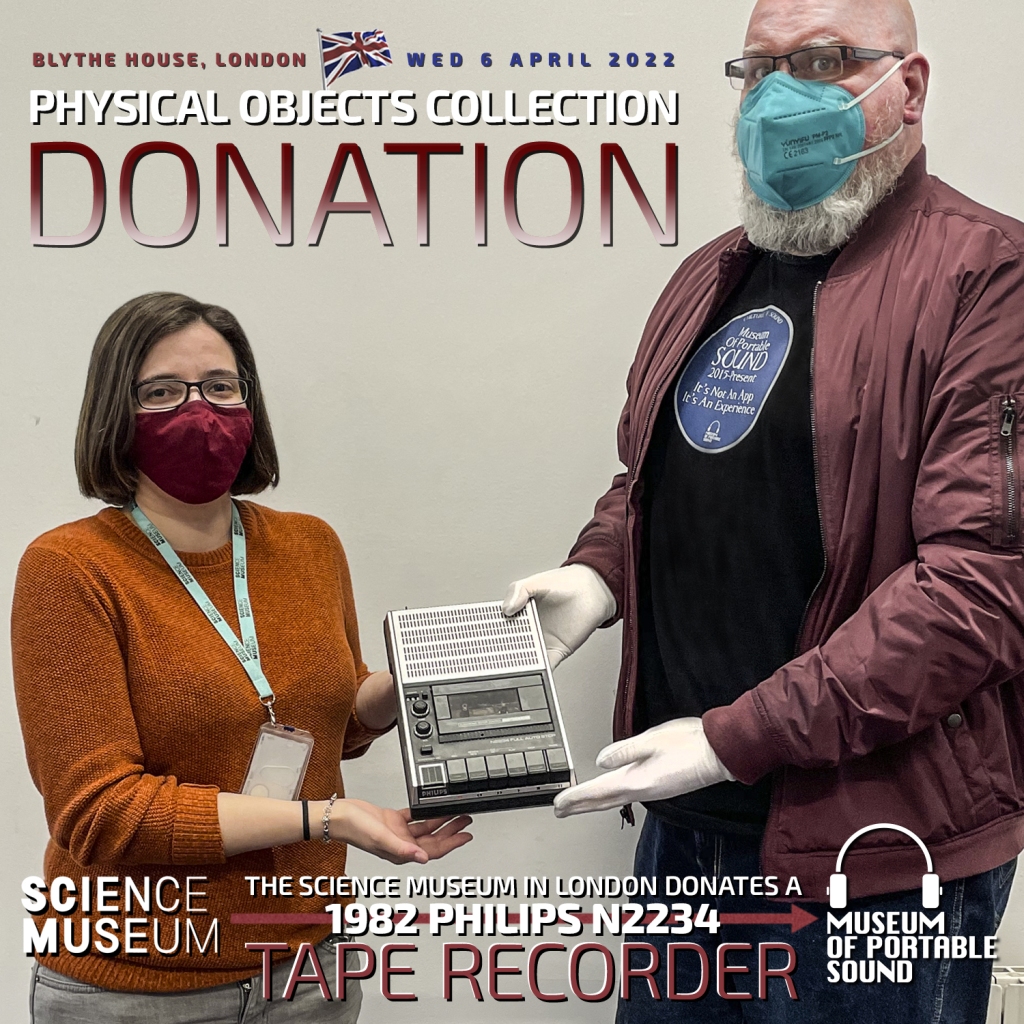
The Philips N2234 tape recorder is handed over in the reception area of Blythe House Archive, London, 6 April 2022. Museum of Portable Sound Archives photograph by Lara Torres.

BLYTHE HOUSE ARCHIVE, LONDON – A vintage 1982 Philips portable tape recorder once held in the Science Museum’s archives has been officially transferred to the collections of the Museum of Portable Sound.

Continue reading “Science Museum in London Donates Object to Museum of Portable Sound”

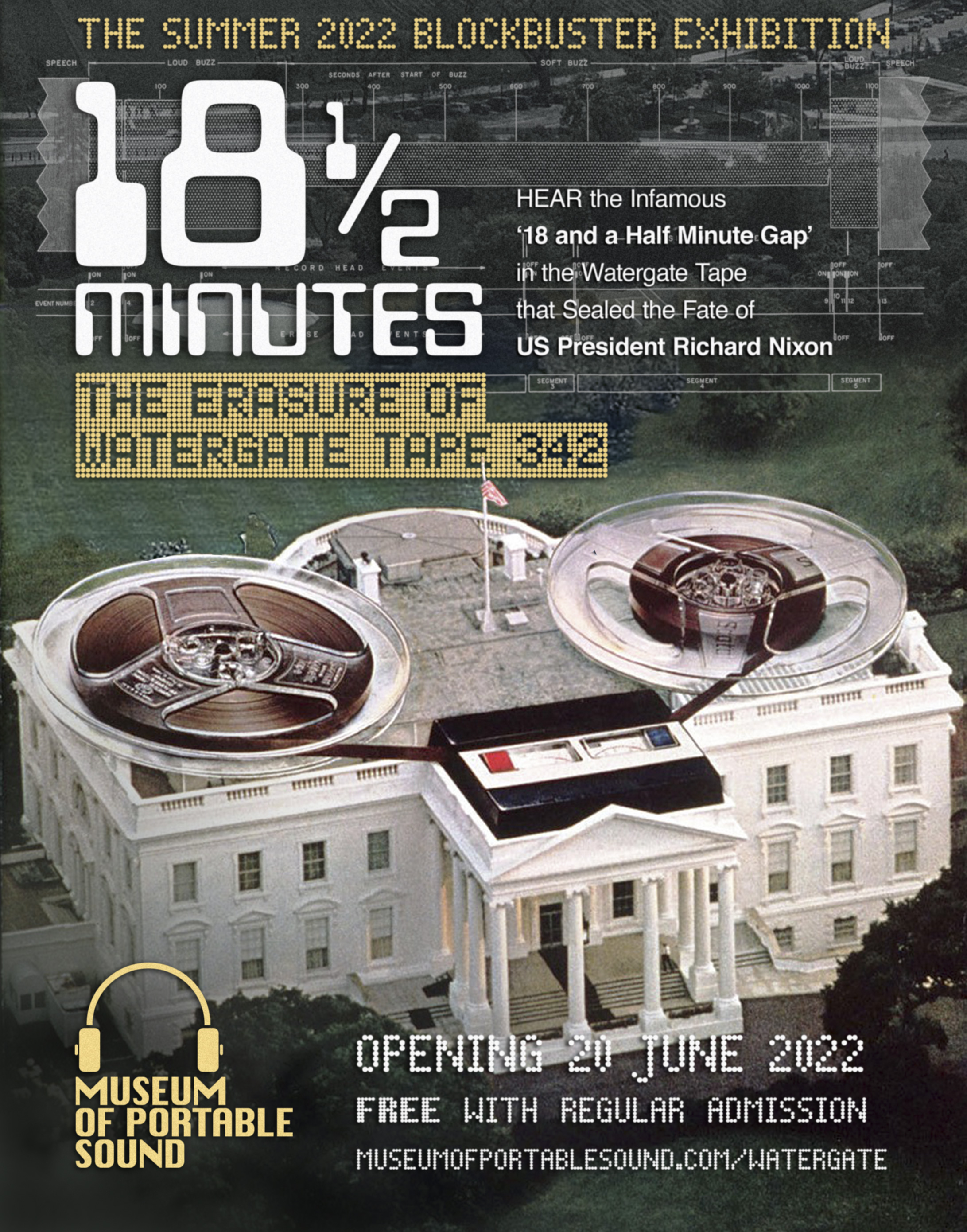
Announcing Our Summer 2022 Blockbuster Exhibition!

18 1/2 Minutes: The Erasure of Watergate Tape 342

Hear the infamous gap in the tape that sealed the fate of US President Richard Nixon exactly 50 years ago

Hear the infamous '18 and a half minute gap' in the Watergate tape that sealed the fate of US President Richard Nixon
Continue reading “Announcing Our Summer 2022 Blockbuster Exhibition!”

Apple Announces ‘Most Sustainable iPhone Ever’, iPhone TC

CUPERTINO, Calif., 1 April, 2022–(BUSINESS WIRE)–Apple® today announced the ‘most sustainable iPhone® ever’, the iPhone TC (standing for ‘Tin Can’).

Apple CEO Tim Cook stated “If we’re going to reach Net Zero by 2050, we’re all going to have to innovate like never before. Today, I’m excited to introduce you to the newest addition to the iPhone family. The new iPhone TC is the sleekest, easiest to use, most affordable, and most sustainable iPhone you’ll ever see.”

Continue reading “Apple Announces ‘Most Sustainable iPhone Ever’, iPhone TC”

Architectural Spotlight: Designing the Museum of Portable Sound

The sounds we exhibit in our Permanent Collection Galleries are stored on a single iPhone 4S. It is this single iPhone that all our visitors – online and in-person – listen to when accessing our collections of digital audio files, which are not available to stream online nor in a mobile app they can listen to on their own time.

But why? Why would a 21st century museum keep a collection of digital audio offline and inaccessible? Isn’t online access the only thing that keeps museums relevant in the digital age?

Now you can learn everything you’ve ever wanted to know about the design of our museum’s conceptual, performative architecture in our new architectural spotlight essay.

Why ‘Portable Sound’?

A headline reads 'Wht We Mean When We Talk About 'Portable Sound'.

A white box with rounded corners and a thick black outline contains a row of graphic black & white icons in a single row, each separated by a grey 'plus sign' (+). The icons from left to right represent: a microphone, a radio tower, headphones, a telegraph machine, a mobile phone, a person speaking, a written document, a comic-style 'POW!' sound effect, and a human ear.

“I thought ‘Museum of Portable Sound’ sounded equal parts legitimate and confusing, which in my mind was a huge advantage.”

Why are we called the Museum of ‘Portable Sound’? And what even IS ‘Portable Sound’?

Read a new interview with our Director & Chief Curator discussing the various meanings of what ‘portable sound’ means to our institution and why we chose it for our name.

Get to Know Our Collections!

The four collections held by the Museum of Portable Sound: Permanent Collection of Sounds, Physical Objects Collection, Research Library, and Video Gallery
We’ve got brand new pages on our website showcasing all four of our primary collections!

We’ve just completed a substantial update to our website: an all-new section about our Collections!

There are now individual pages dedicated to each of our four primary collections:

Read about how each collection got its start, look at behind-the-scenes photos, browse highlights of each collection, download PDF guides, and more!

Seismograf.org Interview with Our Director

Screenshot of the Seismograf interview

Denmark-based music and sound studies magazine Seismograf has published an extensive interview with Dr John Kannenberg, our Director and Chief Curator, conducted last summer by writer Julie Hugsted.

The interview covers the history of our museum, highlights from the Permanent Collection, and many of the influences and strategies that have helped shape what our museum is today.

Coming November 2022: #MiniDisc30

One of our museum’s favourite portable sound formats, the MiniDisc, turns thirty years old this November – and we will spend that month celebrating it!

Watch this space, as well as our social media accounts, for updates as we get closer to MiniDisc30 this November – we’ll make sure to tag everything with #MiniDisc30.